Why Is My Dog Tipping Over Food Bowl
- Houndsy
Table of Contents
- Introduction
- The Power of Canine Instinct: Caching and Burying
- Sensory Sensitivity and the Wrong Bowl
- Seeking Attention through Naughty Behavior
- Boredom and the Foraging Instinct
- Social Dynamics and Resource Guarding
- Physical Comfort and Health Indicators
- Practical Solutions for a Mess-Free Kitchen
- The Role of a Stable Feeding Routine
- Step-by-Step: Transitioning to a New Routine
- Making the Feeding Ritual Part of Your Home
- Conclusion
- FAQ
Introduction
You walk into the kitchen expecting a quiet morning, only to find a sea of kibble scattering across the floor after a familiar metallic clatter. Your dog stands over the mess, looking remarkably unbothered, and begins vacuuming up the pieces directly off the hardwood. At Houndsy, we have seen this scenario play out countless times, and while it might feel like a personal critique of your housekeeping, it is actually one of the most common feeding frustrations pet owners face.
This behavior, while messy and inconvenient, is rarely an act of simple mischief. From ancient evolutionary drives to modern sensory sensitivities, your dog is likely trying to communicate something about their meal, their environment, or their physical comfort. We created this guide to help you decode the specific motivations behind the “flip and spill” cycle and provide actionable ways to restore order to your home. You can also explore this related guide to why dogs throw food out of their bowls.
Understanding the root cause allows us to transition toward a feeding experience that is more consistent, less stressful, and visually integrated into your living space. By matching the right solution to your dog’s specific needs, you can turn mealtime back into a peaceful ritual with a stable feeding solution.
Quick Answer: Most dogs tip over their food bowls due to ancestral instincts like “burying” food for later, sensory discomfort like whisker fatigue, or a desire for attention. It can also be a reaction to environmental stress or a way to make a boring meal feel more like an interactive foraging game.
The Power of Canine Instinct: Caching and Burying
One of the most frequent reasons a dog knocks over their food bowl is rooted deep in their evolutionary history. Before dogs were our household companions, their wild ancestors had to protect their resources from scavengers and rivals. In the wild, a successful hunt often yielded more food than a canine could consume in one sitting.
To save the surplus, they would bury the leftovers in the ground to hide the scent and keep the food cool. This behavior is known as caching. Even though your dog knows their next meal is coming like clockwork, that ancient “save for later” software is still running in the background.
When a dog nudges or flips a bowl, they may be attempting to “bury” the food under an invisible layer of dirt. You might notice them using their nose to push air or imaginary soil over the scattered kibble once it is on the floor. This is especially common if you are feeding more than your dog needs in one sitting. If they feel full, their instinct tells them to protect the leftovers.
Key Takeaway: Bowl flipping is often a vestigial instinct where a dog tries to “bury” or cache their food for later safety, even in a comfortable, modern home environment.
Sensory Sensitivity and the Wrong Bowl
Sometimes the problem isn’t the food at all, but the vessel it comes in. Dogs have incredibly sensitive whiskers and a keen sense of hearing, both of which can make a standard food bowl a source of constant irritation. If a bowl is too deep or narrow, your dog’s whiskers may constantly brush against the sides every time they take a bite.
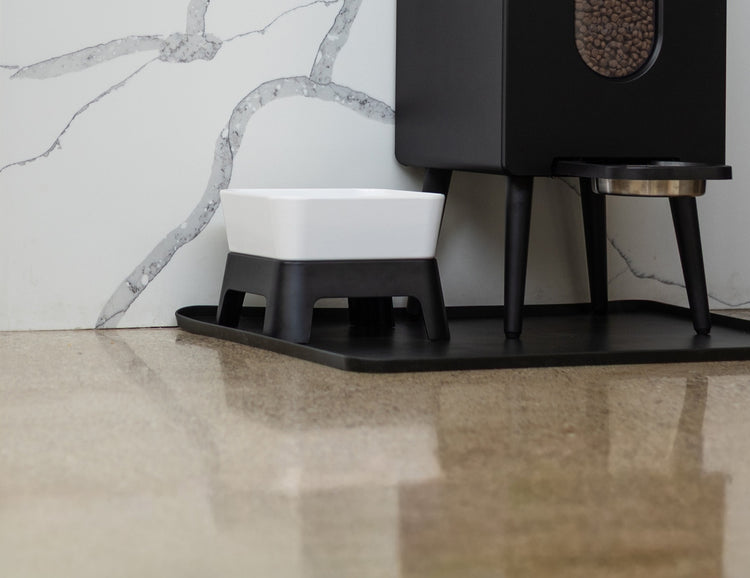
This leads to a sensation known as whisker fatigue. It is a form of sensory overload that makes the act of eating physically uncomfortable. By flipping the bowl, your dog creates a wide, flat surface on the floor where they can eat without their whiskers touching anything. A wider, more stable setup, such as this elevated feeding station, may help remove some of those physical triggers.
Material Matters
The material of the bowl also plays a significant role in how your dog interacts with it. Different materials present different sensory challenges that might lead to a tipped bowl:
- Metal Bowls: While durable and easy to clean, stainless steel is highly reflective and noisy. If your dog’s collar tags clink against the rim, or if the bowl slides across a tile floor making a scraping sound, it can startle a noise-sensitive pup. Some dogs also dislike seeing their own reflection moving in the bottom of the dish.
- Plastic Bowls: These are porous and can retain the scent of old fat or dish soap, even after a thorough washing. To a dog’s sophisticated nose, a bowl that smells like old food and lemon soap might be off-putting enough to merit a flip.
- Lightweight Materials: A flimsy bowl that moves while the dog is eating is a major frustration. If the bowl “chases” them across the kitchen, they may flip it simply to keep the food in one place.
Myth: My dog flips their bowl because they are being “dominant” or trying to annoy me.
Fact: Dogs do not act out of spite; they act out of instinct, physical discomfort, or because the behavior has been accidentally reinforced by attention.
Seeking Attention through Naughty Behavior
Dogs are master observers of human behavior and know exactly which actions get a rise out of us. They understand that the sound of a bowl hitting the floor is a surefire way to get you to walk into the room. If your dog flips their bowl and you immediately run over to talk to them, clean up the mess, or offer a different food topper to “fix” the problem, they have successfully won your engagement.
To a bored or under-stimulated dog, even a sigh of frustration or a firm “no” is better than being ignored while you are busy with household chores. This is particularly common in high-energy breeds that aren’t getting enough mental stimulation throughout the day. If you suspect this is the cause, you may notice the behavior happens most often when you are in the room but not actively focusing on your pet.
Boredom and the Foraging Instinct
In the wild, dogs spend the majority of their waking hours searching for and acquiring food. Walking to a stationary bowl and eating a pile of kibble takes roughly thirty seconds and provides very little mental enrichment. For a highly intelligent dog, this can be incredibly boring.
Tipping the bowl turns mealtime into an interactive game. Once the kibble is scattered, the dog has to “hunt” for each piece, moving them around with their paws and nose. They are essentially creating their own puzzle feeder to satisfy their natural foraging instinct. If your dog seems to enjoy the “hunt” on the floor more than the meal in the bowl, they are likely craving a bit more engagement during the feeding ritual. For related ideas, read about why dogs play with their food bowls.
Bottom line: When a dog’s natural drive to forage isn’t met, they may flip their bowl to create a more challenging and mentally stimulating “hunting” experience on your kitchen floor.
Social Dynamics and Resource Guarding
In homes with multiple animals, bowl tipping is frequently linked to social pressure and resource guarding. Even the friendliest dogs can become competitive when it comes to high-value resources like food. If your dog feels that a housemate—whether it’s another dog, a cat, or even a curious toddler—is eyeing their dinner, they may flip the bowl as a defensive maneuver.
By knocking the food out, they can spread it across a larger area. This makes it harder for another animal to “steal” it all at once. It also allows the dog to move the food into a corner or under a table where they feel less vulnerable. If you notice your dog stiffening their body or eating at a frantic pace before the flip occurs, they are likely feeling the need to “claim” the area.
Physical Comfort and Health Indicators
While most bowl-flipping is behavioral or instinctual, sudden changes in how a dog interacts with their food can signal a physical problem. If a dog who has always been a “clean” eater suddenly starts dumping their bowl, it is worth observing them closely for signs of discomfort.
Dental Pain
If a dog has a sore tooth, inflamed gums, or mouth sensitivity, the clinking of a metal bowl or the vibration of their teeth hitting a hard surface can be painful. By flipping the food onto the floor, they can pick up individual pieces more gingerly. They avoid the risk of bumping their mouth against the hard edges of the container.
Joint and Neck Strain
For older dogs or breeds prone to arthritis, bending all the way down to a floor-level bowl can put a significant strain on the neck and shoulders. They may flip the bowl to move the food to a position that requires less bending, or they may act out due to the general frustration caused by the discomfort of the posture. A standing-height kibble dispenser can offer a different feeding position, though sudden changes in eating behavior still deserve attention.
- Watch for: Stiff movements when approaching the bowl.
- Watch for: Eating while lying down after the food is spilled.
- Watch for: Hesitation or “whining” at the bowl before flipping it.
Key Takeaway: If your dog suddenly starts knocking over their bowl after years of clean eating, it may be a sign of dental pain or joint discomfort that makes traditional feeding difficult.
Practical Solutions for a Mess-Free Kitchen
Once you have identified the likely cause of the behavior, you can take active steps to change the environment and the routine. The goal is to make the bowl more difficult to flip while making the act of eating more comfortable and mentally satisfying.
Switch to a Weighted Solution
Replace lightweight plastic or sliding dishes with heavy ceramic or stainless steel bowls that feature wide, non-slip silicone bases. These are much harder for a dog to get leverage under. A bowl that doesn’t “chase” the dog across the floor is less likely to be flipped out of frustration.
A fixed setup like our kibble dispenser can also keep the serving bowl in place while making the feeding station part of the room rather than a loose object on the floor.
Audit the Feeding Location
Move the feeding station to a quiet, low-traffic corner where your dog can see the room but won’t be bumped. If you have multiple pets, try feeding them in separate rooms to remove the pressure of resource guarding. This allows your dog to relax and focus on their meal without feeling the need to “spread and protect” their food.
Control the Portions
Overfeeding is a primary trigger for the “burying” instinct. If there are always leftovers, your dog will feel the need to cache them. Ensure you are providing the exact amount your dog needs for that specific meal. Keeping portion sizes consistent and proportionate with your dog’s weight, age, and activity levels is the best way to prevent surplus food from becoming a “project” for your dog to hide.
The Role of a Stable Feeding Routine
At the heart of many feeding frustrations is a lack of consistency. Dogs thrive on predictable routines, and the way we store and serve their food plays a massive role in their behavior. Many owners hide large, unattractive plastic bins in the garage or leave open bags in the pantry, leading to inconsistent portions and stale kibble that dogs are more likely to reject or “play” with.
A predictable schedule is the best defense against many unwanted behaviors. When a dog knows exactly when and where they will be fed, their “food anxiety” drops significantly. They no longer feel the need to bury their food for a rainy day or flip their bowl to get your attention because they trust the reliability of the system. For more guidance, explore this advice on creating a consistent kibble-feeding routine.
We designed the Houndsy Kibble Dispenser to help establish this stability. By bringing the feeding station out of the utility closet and into the heart of the home, you can create a permanent, calm environment. The standing-height crank mechanism means you no longer have to bend down to scoop, and the heavy, stable design makes it virtually impossible for a dog to tip or move the station like a loose bowl on the floor.
Consistency also means better freshness. The BPA-free liner in this portion-control feeding system holds up to 30 pounds and helps keep kibble fresh and appetizing. When the food stays fresh, your dog is more likely to engage with the meal directly rather than nudging or flipping a bowl of stale food. Additionally, the auto-locking mechanism prevents curious paws or toddlers from accidentally dispensing food, keeping the routine secure.
Step-by-Step: Transitioning to a New Routine
If your dog has developed a deep habit of flipping their bowl, you won’t change it overnight. It requires a patient, procedural approach to rebuild their relationship with mealtime.
Step 1: Stabilize the station. / Replace your loose bowl with a heavy, non-slip alternative or an integrated standing-height feeding station that cannot be easily moved.
Step 2: Audit the noise and material. / If you use metal, try a non-reflective ceramic dish. If you use plastic, ensure it is thoroughly cleaned or replaced with a non-porous material that doesn’t hold odors.
Step 3: Establish a “calm-first” rule. / Only begin the feeding process when your dog is sitting and calm. If they begin pawing at the bowl or acting frantic, pause the routine until they settle down.
Step 4: Control the environment. / Ensure the feeding area is a “no-go” zone for other pets or high-traffic activity during mealtimes. This removes the social stress that often leads to resource guarding.
Step 5: Use perfect portion control. / Feed only what your dog will eat in one sitting to eliminate the urge to cache leftovers. Our dispenser provides the same amount with every crank, making this step automatic.
Making the Feeding Ritual Part of Your Home
We often treat dog feeding as a mess to be managed, but it is one of the most important moments of the day for your pet. When we choose products that complement our home decor, we are more likely to keep them in well-monitored, accessible areas. A beautiful feeding station doesn’t just look better; it functions better by integrating your dog’s needs into your daily life.
The Houndsy Kibble Dispenser was born from the idea that you shouldn’t have to choose between a functional pet product and a beautiful home. By simplifying the process—no bending, no scooping, and no mess—we make it easier for you to be the consistent leader your dog needs. You can read more about the design philosophy behind the brand. Our mission is to simplify and elevate the dog feeding experience, making it convenient for you and consistent for your dog.
When feeding becomes a seamless part of your environment, the behaviors born from boredom and inconsistency tend to fade. You move away from the frustration of cleaning up kibble and toward a routine that honors your dog’s instincts while respecting your living space.
Conclusion
Understanding why dogs flip their food bowls is the first step toward a cleaner, calmer home. Whether your pet is following an ancient urge to bury their “kill,” reacting to a noisy metal bowl, or simply looking for a little extra attention, there is always a practical solution. By focusing on consistency, physical comfort, and high-quality design, you can transform mealtime from a source of frustration into a peaceful part of your day.
At Houndsy, we believe that the tools you use for your dog should be as well-crafted as the rest of your furniture. If you are ready to end the scoop-and-spill cycle and bring some mid-century modern elegance to your dog’s routine, we are here to help.
- Audit your dog’s bowl material and noise levels.
- Check for signs of overfeeding or resource guarding.
- Establish a rock-solid daily feeding schedule with consistent portions.
- Consider a stable feeding solution that integrates into your home and eliminates bending.
Making the feeding ritual convenient and consistent is the best way to ensure your dog feels secure and your home stays tidy. Explore the Houndsy Kibble Dispenser and review the 30-day money-back guarantee before deciding whether a dedicated feeding station fits your routine.
FAQ
Why does my dog flip their bowl but still eat the food off the floor?
Your dog likely prefers the “flat” surface of the floor over the sensory experience of the bowl. This can be due to whisker fatigue, where the bowl is too deep and narrow, or because the bowl makes a noise, such as clinking tags, that startles them. By flipping the bowl, they create a wide, silent area where they can eat comfortably without sensory irritation.
Does knocking over a food bowl mean my dog doesn’t like their food?
It can, but it is rarely the only reason. If the food is stale or the brand has recently changed, a dog might nudge the bowl to “inspect” it, which can lead to accidental flipping. However, if they still eat the food once it is on the floor, the issue is more likely related to the bowl material, a foraging instinct, or an ancestral habit of “burying” the meal.
Should I punish my dog for making a mess with their food?
No, punishment is generally ineffective for feeding behaviors and can increase food-related anxiety. Your dog isn’t trying to be “bad”; they are following an instinct or reacting to physical discomfort. Instead, ignore the behavior while cleaning it up and focus on changing the environment—such as using a heavier bowl or a more stable feeding station—to prevent the behavior from occurring again.
Can an elevated feeder stop my dog from knocking their bowl over?
In many cases, yes. Elevated feeders make it physically much harder for a dog to get their nose or paws under the rim to flip the bowl. Furthermore, raising the food can reduce the urge to “bury” the meal and makes it significantly more comfortable for larger dogs or those with joint issues to eat without neck strain.