Can You Put Dog Kibble in the Fridge?
- Houndsy
Table of Contents
- Introduction
- The Science of Kibble Preservation
- The Pros and Cons of Refrigerating Dry Dog Food
- How to Store Kibble if You Must Use the Fridge
- The Ideal Storage: Room Temperature
- Common Myths About Dog Food Storage
- Signs That Your Kibble Has Spoiled
- Factors That Influence Kibble Shelf Life
- Creating a Consistent Feeding Routine
- Where Design Meets Functionality
- Summary of Best Practices for Storage
- Conclusion
- FAQ
Introduction
You’ve probably been there: standing in your kitchen with a brand-new, twenty-pound bag of premium dog food, wondering where on earth it’s supposed to go. You want that kibble to stay as fresh and crunchy as the day you bought it. In an effort to preserve the nutrients and prevent spoilage, you might find yourself staring at the refrigerator and wondering if a little extra chill is the answer.
At Houndsy, we know that keeping your dog's food fresh is a top priority for any dedicated pet owner. We spend a lot of time thinking about how to make the feeding experience better, and that starts with understanding how to handle the food itself. If you’re looking for a more streamlined way to store and serve kibble, the Houndsy Kibble Dispenser is built with that ritual in mind.
The short answer is that while you can put kibble in the fridge, it is rarely the best solution for maintaining quality. Most dry dog foods are designed to thrive in a very specific environment that a refrigerator cannot always provide. Understanding the science of food storage will help you make the best choice for your pup’s health and your own peace of mind. If you want a deeper dive into shelf life before you decide on a storage method, how long dry dog food stays fresh is a helpful companion read.
Quick Answer: While you can technically put dog kibble in the fridge, it is generally not recommended for daily storage. The high humidity and frequent temperature shifts inside a refrigerator can cause condensation, which leads to mold growth and loss of nutritional value.
The Science of Kibble Preservation
To understand why the fridge might not be the best home for your dog’s dinner, we have to look at what kibble actually is. Dry dog food is a carefully balanced mixture of proteins, carbohydrates, and fats. During the manufacturing process, most of the moisture is removed to make the product shelf-stable. This low moisture content is exactly what keeps bacteria and mold at bay.
When you introduce that dry product to a cold, damp environment like a refrigerator, you are fighting against the way the food was engineered. Kibble is porous. It acts like a little sponge, ready to soak up any ambient moisture in the air. If the environment is too humid, the kibble loses its crunch and begins to break down.
The Role of Fats and Oxidation
Fats are essential for your dog’s skin, coat, and brain health, but they are also the most fragile part of the kibble. When fats are exposed to oxygen, they begin to break down in a process called oxidation. This is what causes food to go "rancid."
While cold temperatures do slow down oxidation, the benefits are often canceled out by the risks of moisture. Rancid fats don't just smell bad; they can actually be harmful to your dog's digestive system over time. Most high-quality kibbles use natural preservatives like tocopherols (Vitamin E), which work well at room temperature as long as the bag is sealed.
Why Temperature Consistency Matters
The main enemy of food storage isn't just heat; it's the constant changing of temperatures. Every time you take a container of kibble out of the fridge to feed your dog and then put it back, you are creating a "dew point" scenario.
Think about a cold glass of water on a summer day. Beads of water form on the outside of the glass. The same thing happens inside your kibble container when cold air meets warm kitchen air. That tiny amount of condensation is enough to jumpstart the growth of mold spores that you might not even see until the problem is severe.
The Pros and Cons of Refrigerating Dry Dog Food
If you live in a very specific environment, the fridge might seem tempting. However, it’s important to weigh the perceived benefits against the very real drawbacks. Most experts agree that the risks of spoilage in the fridge outweigh the benefits of the cold temperature.
The Potential Benefits
In extremely hot and humid climates where air conditioning isn't an option, some owners use the fridge to prevent the fats in the food from melting or turning rancid. If your home regularly exceeds 85 or 90 degrees Fahrenheit indoors, the heat can degrade the vitamins and minerals in the food quite quickly. In these rare cases, the fridge is a "lesser of two evils" choice.
The Major Drawbacks
The most significant drawback is moisture. Refrigerators are surprisingly humid environments. This humidity is great for keeping a head of lettuce crisp, but it is disastrous for a dry biscuit. Moisture leads to mold, and certain types of mold produce mycotoxins, which are highly toxic to dogs.
Another downside is the loss of flavor. Cold food doesn't smell as strong as room-temperature food. Since a dog's sense of taste is closely tied to their sense of smell, they may find refrigerated kibble less appealing. If you have a picky eater, serving them cold, damp kibble is a recipe for a skipped meal.
Key Takeaway: The best storage environment for dry dog food is a cool, dark, and dry place where the temperature remains consistent and below 80 degrees Fahrenheit.
How to Store Kibble if You Must Use the Fridge
If you still feel that the refrigerator is the only safe place for your dog's food—perhaps due to a pest infestation or extreme weather—you must do it correctly to avoid mold. You cannot simply put the paper bag in the fridge and hope for the best.
Use Airtight Containers
If you are putting kibble in the fridge, it must be in a truly airtight container. Glass or high-quality, BPA-free plastic with a silicone seal is your best bet. For a more polished at-home setup, our BPA-free storage liner helps keep kibble fresh while keeping the routine simple.
Small Batches Only
Never try to store a 30-pound bag of food in the refrigerator. The sheer volume of food makes it impossible to keep the temperature consistent throughout the container. Instead, if you must use the fridge, only store a few days' worth of food at a time. Keep the rest of the bag in a cool, dry pantry.
Step-by-Step: Proper Fridge Storage for Kibble
Step 1: Divide the food. / Separate a 3-to-4-day supply of kibble from the main bag. Step 2: Use a sealed container. / Place the portion into a clean, dry, airtight container made of glass or heavy-duty plastic. Step 3: Minimize "open time." / When it’s time to feed, take the container out, scoop the portion, and put the container back immediately to prevent condensation. Step 4: Check for moisture. / Every time you open the container, look for any signs of "sweating" on the inside walls. If you see water, the food is at risk.
The Ideal Storage: Room Temperature
For the vast majority of households, the best place for dog food is exactly where the manufacturer recommends: a cool, dry place. This usually means a pantry, a kitchen cabinet away from the oven, or a dedicated storage area in the home.
The goal is to avoid the "Big Three" enemies of kibble:
- Air: Oxygen causes fats to turn rancid.
- Light: UV rays can break down vitamins.
- Moisture: Humidity leads to mold and bacterial growth.
The Importance of the Original Bag
Many dog owners make the mistake of pouring the kibble directly into a plastic bin. While this looks neat, it’s actually not the best for the food. The original bags are often engineered with oil-resistant liners that keep the fats from soaking into the packaging. For a fuller look at shelf life and storage, read how long dry dog food lasts.
When you pour food into a plastic bin, the oils from the kibble coat the sides of the plastic. Over time, those oils go rancid. Unless you are scrubbing that bin with hot soapy water and drying it completely between every single bag, you are contaminating your new food with old, spoiled fats.
Elevating the Storage Experience
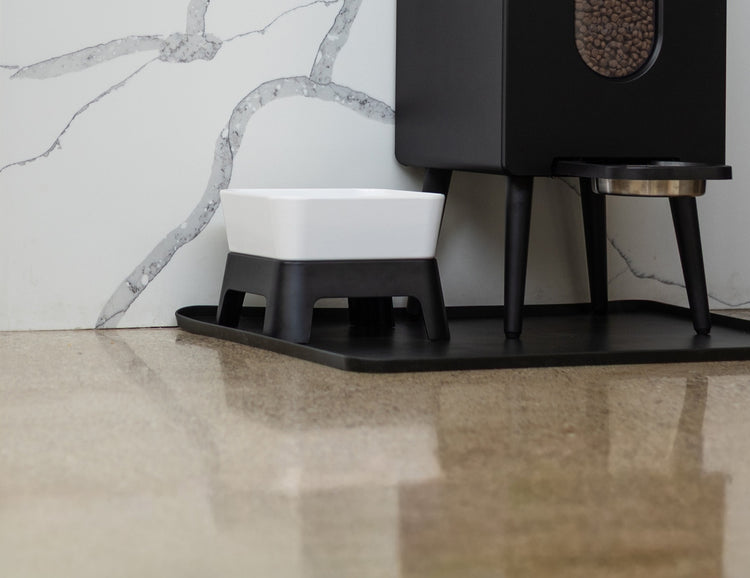
We believe that functionality shouldn't come at the expense of style. You shouldn't have to hide a giant, crinkly bag in a dark closet just to keep it fresh. This is why this mid-century modern feeder features a BPA-free liner that is designed to keep food fresh while looking beautiful in your home.
By using a dedicated system, you get the best of both worlds. The liner protects the food from the environment, while the design allows you to keep the feeder in your kitchen or dining area without it becoming an eyesore. It solves the problem of where to put the bag while ensuring the kibble stays in the ideal environment.
Common Myths About Dog Food Storage
There is a lot of conflicting advice out there, which can make it hard to know if you're doing the right thing. Let’s clear up some of the most common misconceptions about keeping your dog's food safe.
Myth: Putting dry kibble in the fridge keeps it fresh longer because it's cold. Fact: Cold temperatures help slow fat rancidity, but the humidity of a fridge often introduces moisture that causes mold faster than room-temperature storage.
Myth: It’s okay to mix the "dust" from the bottom of an old bag into the new bag. Fact: The small bits and crumbs at the bottom of the bag have the highest surface area and oxidize the fastest. Mixing them into a new bag can actually speed up the spoilage of your fresh food.
Signs That Your Kibble Has Spoiled
Regardless of where you store it, you should always check the food before you put it in your dog’s bowl. Dogs have a much better sense of smell than we do, but they can’t always tell us when something tastes "off."
Look for these warning signs:
- The Smell Test: If the food smells sour, musty, or like old paint, the fats have likely gone rancid. Fresh kibble should have a mild, nutty, or meaty aroma.
- Visible Mold: This is an obvious one. Any white, green, or black fuzz means the entire batch should be tossed. Mold spores can exist throughout the bag even if you only see them in one spot.
- Texture Changes: If the kibble feels sticky, oily, or unusually soft, it has absorbed too much moisture.
- Your Dog's Reaction: If your normally enthusiastic eater suddenly turns their nose up at their bowl, listen to them. They might be smelling spoilage that you can't detect.
Bottom line: If in doubt, throw it out. The cost of a new bag of food is significantly lower than a trip to the emergency vet for food poisoning or digestive upset.
Factors That Influence Kibble Shelf Life
Not all kibbles are created equal. The ingredients in your specific brand will dictate how sensitive it is to storage conditions.
Natural vs. Synthetic Preservatives
Foods that use synthetic preservatives (like BHA or BHT) tend to be more "bulletproof" in varied temperatures. However, many modern, high-end dog foods use natural preservatives like Vitamin E (mixed tocopherols) or rosemary extract. These are much healthier for your dog, but they are also more sensitive to heat and light. If you buy "all-natural" food, proper storage is even more critical.
Fat Content
High-fat diets, such as those formulated for working dogs or puppies, are more prone to rancidity. If your dog is on a high-fat or "performance" diet, you need to be extra vigilant about keeping the food in a cool, dark place.
Bag Size
It is often tempting to buy the largest bag available to save money. However, if that bag takes your dog three months to finish, the food will almost certainly be stale and nutritionally degraded by the end. Ideally, you should buy a bag size that your dog can finish within 4 to 6 weeks.
Creating a Consistent Feeding Routine
Consistency is about more than just the time of day you feed your dog. It’s also about the quality and quantity of the food they receive. When you have a dedicated storage and dispensing system, maintaining that consistency becomes much easier.
We designed the Houndsy dispenser to handle up to 30 lbs of food, which is the standard size for most large bags. This means you can fit the entire bag into the dispenser at once, reducing the amount of time the food is exposed to the air. Instead of fumbling with a heavy bag and a plastic scoop every morning, you simply use the standing-height crank.
This level of convenience does more than just save your back; it ensures that your dog gets the exact same portion every single time. Consistent portions lead to a healthier weight and a more predictable digestive schedule, which is a win for both you and your pup.
Where Design Meets Functionality
Many pet owners feel like they have to choose between a clean, modern home and a well-fed dog. Traditional food bins are often made of bright blue or translucent plastic that looks like it belongs in a garage. They are bulky, awkward to open, and difficult to clean.
A design-forward approach to pet care recognizes that your dog’s belongings are a part of your living space. When a product is beautiful, you don't feel the need to hide it in the laundry room or the pantry. That mindset is at the core of our mission to simplify and elevate the dog-feeding experience. By bringing the feeding station into the heart of the home, you make the ritual of feeding more integrated into your daily life.
The mid-century modern aesthetic of our dispenser ensures it complements your decor rather than clashing with it. It’s a functional piece of furniture that also happens to be the best way to keep your dog’s food fresh, consistent, and easy to access.
Summary of Best Practices for Storage
To keep your dog's kibble fresh and safe, follow these simple guidelines:
- Avoid the fridge unless you are dealing with extreme heat and can use airtight, small containers.
- Store in a cool, dry place (under 80°F) to prevent fat rancidity.
- Keep the food in its original bag inside a container, or use a specialized liner like the one in our dispenser.
- Seal the container tightly after every single use to minimize oxygen exposure.
- Buy for the month, not the season. Only buy as much food as your dog can eat in 6 weeks.
- Clean your storage containers regularly to remove old oils and crumbs.
Conclusion
Feeding your dog should be one of the best parts of your day—a moment of connection and care. While it might seem like a good idea to put kibble in the fridge to keep it "fresh," the risks of moisture and mold usually outweigh the benefits. For most homes, a high-quality storage solution at room temperature is the healthiest and most convenient choice.
Our mission at Houndsy is to simplify the ritual of feeding by creating products that are as beautiful as they are functional. We believe that by elevating the way we store and serve dog food, we can make life a little easier for owners and a lot better for dogs. Whether it's through the perfect portion control of our standing-height crank or the freshness provided by our BPA-free liners, we are dedicated to helping you provide the best for your pet.
If you’re ready to move away from the "bag in the closet" or the "bin in the fridge" and want a feeding experience that fits your lifestyle, the Houndsy Kibble Dispenser is a great place to start.
We offer a 30-day risk-free guarantee because we are confident that once you experience a more convenient, consistent, and beautiful way to feed your dog, you’ll never want to go back to the old way.
Key Takeaway: Proper kibble storage is about balance. By protecting food from air, light, and moisture in a temperature-controlled environment, you ensure your dog stays healthy and their meals stay delicious.
FAQ
Can I freeze my dog's dry kibble instead of refrigerating it?
Yes, you can freeze dry kibble to extend its shelf life, but you must be careful about moisture. The food should be placed in an airtight, freezer-safe bag or container with as much air removed as possible. When you're ready to use it, let the food thaw completely at room temperature before opening the container to prevent condensation from forming on the kibble.
How long does a bag of dry dog food stay fresh once opened?
Most manufacturers recommend consuming a bag of dry food within 4 to 6 weeks of opening. Even with excellent storage, the fats begin to oxidize and the vitamins lose their potency once exposed to air. If you want a deeper dive into shelf life, how long dry dog food lasts is a helpful companion read. If you have a small dog, try to buy smaller bags to ensure the food stays as fresh as possible from the first scoop to the last.
Is it safe to store dog food in the garage?
Storing dog food in a garage is generally not recommended because garages are prone to extreme temperature fluctuations and pests. High heat in the summer can cause the food to spoil quickly, while humidity can lead to mold. It is much safer to keep the food inside your home where the temperature and humidity are regulated.
Can I leave my dog's food bowl out all day if the kibble was refrigerated?
If you serve refrigerated kibble, it will quickly reach room temperature. Leaving it out (free-feeding) is generally fine for a few hours, but it isn't ideal. Once the food is in the bowl, it is exposed to the air and can attract pests or become stale. It is better to stick to a consistent feeding schedule and remove any uneaten food after 20-30 minutes. If you want help building a steadier mealtime habit, how to feed kibble to dogs offers practical tips.