How to Can Homemade Dog Food: A Safer Approach
- Houndsy
Table of Contents
- Introduction
- Why homemade dog food is tricky to can
- Why a sealed jar is not proof of safety
- A practical alternative: portion and freeze
- Make sure the recipe fits your dog
- Plan portions when mixing homemade food and kibble
- Keep a pantry backup without home canning
- A simpler feeding plan
- FAQ
Introduction
Making a big batch of dog food sounds convenient until you run out of refrigerator space. You may be wondering whether you can put those meals in jars and keep them in the pantry instead.
We recommend freezing homemade dog-food mixtures rather than trying to make them shelf-stable at home. Meat, vegetables and grains can heat differently in a jar, so a processing time for plain meat does not automatically work for a mixed meal.
At Houndsy, we understand the appeal of a feeding routine that saves time and cuts down on daily prep. Here, we’ll cover why canning a mixed recipe is complicated, how to store homemade food instead, and how to plan portions alongside kibble.
The safest practical plan is to use a suitable recipe for your dog, portion it carefully and keep it refrigerated or frozen.
Why homemade dog food is tricky to can
Canning isn’t simply cooking food in a sealed jar. A safe home-canning process needs to account for the food’s ingredients, texture, jar size and the way heat moves through the contents. (nchfp.uga.edu)
Many homemade dog-food recipes contain meat and low-acid vegetables. In an improperly processed, sealed jar, conditions can allow Clostridium botulinum to produce the toxin that causes botulism.
A pressure canner is necessary for properly tested low-acid canning processes, but the equipment alone does not make an improvised recipe safe. The recipe and processing instructions must work together.
For example, a time intended for plain meat cannot reliably be transferred to a jar containing meat, rice and vegetables. A thick or puréed mixture may heat differently from a thinner one. Adding more processing time or increasing pressure on your own does not establish that the center of the jar received the necessary heat.
What about rice, pasta or a meat-and-vegetable topper?
Rice, pasta and other ingredients that thicken a mixture can change how heat reaches the center of a jar. Removing the rice does not automatically make a meat-and-vegetable mixture safe to can, either.
The same distinction applies to toppers. A small amount served over kibble still needs safe storage. Treat a homemade topper as perishable food and refrigerate or freeze it rather than assuming a mixed recipe can be stored in the pantry.
Key Takeaway: A tested process for one food is not a general recipe for every combination you can put in a jar.
Why a sealed jar is not proof of safety
A lid that seals is useful, but it cannot tell you whether the contents were processed safely. Neither can a normal appearance or smell. Botulinum toxin cannot be reliably detected by looking at, smelling or tasting food. (cdc.gov)
Other shortcuts don’t solve the problem:
- A boiling-water bath is not appropriate for canning meat-based, low-acid foods.
- An ordinary pressure cooker should not be substituted for the equipment specified in a tested canning process.
- Adding a little vinegar does not make an improvised meat mixture a tested, safe recipe.
- Cooking the food before filling jars does not make the sealed jars shelf-stable.
If you want to explore home canning, look for instructions from the National Center for Home Food Preservation or your local cooperative extension that match the exact food and method. Don’t adapt a process for plain meat into a complete dog-food recipe. Ask your veterinarian how any separately preserved ingredient would fit your dog’s diet.
What if you already canned a batch?
If you used an untested process for a homemade dog-food mixture, do not feed it or taste it to check whether it is safe. A firm seal or pleasant smell does not change that advice.
Contact your local health department or cooperative extension for guidance on safe disposal, especially if a jar is leaking, damaged or has been opened. If your dog has eaten food you suspect is unsafe, contact your veterinarian promptly. Don’t wait for symptoms before asking what to do.
A practical alternative: portion and freeze
Freezing can give you the same ready-to-serve convenience you wanted from jars. It also lets you prepare a batch without trying to make a mixed recipe shelf-stable.
Start with a recipe your veterinarian has reviewed for your dog. Then set aside clean, food-safe containers or freezer bags, a marker and enough freezer space for the portions you plan to store.
-
Prepare the recipe as directed. Follow the ingredient amounts and preparation instructions rather than improvising substitutions. Handle raw ingredients separately from ready-to-eat food, and clean your hands, utensils and work surfaces after preparation.
-
Divide the cooked food into portions. Use shallow containers or smaller portions so the food can cool more quickly. Choose a portion size that fits your feeding plan and avoids repeatedly handling a large batch.
-
Refrigerate or freeze promptly. Don’t leave cooked food sitting on the counter for long periods. Keep your refrigerator at 40°F or colder, and freeze portions you won’t use soon. (fda.gov)
-
Label each container. Note what’s inside and when you prepared it. If the recipe includes supplements added at serving time, keep a clear note with your feeding plan so they aren’t forgotten.
-
Thaw a portion in the refrigerator. Plan ahead so tomorrow’s food can thaw while it stays cold. Avoid thawing homemade food on the counter, and ask your veterinarian for storage guidance specific to the recipe.
Keep the amount you’re ready to serve separate from the rest. Wash the bowl and serving utensils after use, and discard food that has spoiled or has been left out for too long.
Can you use jars in the freezer?
A jar can be a container without making its contents canned food. If you use jars for freezing, choose containers suitable for freezer use and follow their directions for filling them. Food expands as it freezes, so overfilled glass can break.
Freezer-safe containers or bags may be easier to stack and portion. Whichever container you choose, label it and keep the food frozen until you’re ready to thaw it.
Make sure the recipe fits your dog
Safe storage and balanced nutrition are separate questions. A recipe can be refrigerated or frozen properly and still fall short of what a dog needs as a regular diet.
Meat, rice and vegetables may look like a complete meal, but the right balance depends on more than the ingredient list. Dogs need appropriate amounts of nutrients, and those needs vary with their life stage and individual circumstances.
If homemade food will replace all or a substantial part of your dog’s diet, ask your veterinarian about a recipe formulated for your dog. They may recommend working with a board-certified veterinary nutritionist. This is especially useful for a puppy, a pregnant dog or a dog with a medical condition. (vetmed.ucdavis.edu)
Once you have a suitable recipe, follow it closely. Swapping a protein, leaving out a prescribed supplement or estimating amounts can change the recipe. Ask the professional who formulated it before making changes, including changes to how supplements are stored or added.
Be careful with extras
A homemade topper doesn’t have to become a full meal to affect the daily diet. Its calories count, and frequent or generous additions can change the balance of what your dog eats.
Avoid adding onion or garlic to your dog’s food. If you’re unsure about an ingredient, seasoning or supplement, check with your veterinarian before serving it. A food that works in your dinner is not automatically a good addition to your dog’s bowl. (aspca.org)
Plan portions when mixing homemade food and kibble
A convenient feeding routine starts with knowing how much of each food belongs in the bowl. Begin with the feeding plan from your veterinarian or the food’s label, then account for any homemade food and treats your dog receives.
A cup of homemade food is not necessarily equivalent to a cup of kibble. Their calorie content can differ, so replacing one with the same volume of the other may change your dog’s total intake.
If you’re introducing a new food, ask your veterinarian how to make the change for your dog. Introduce it gradually and watch for changes such as vomiting, diarrhea or a reluctance to eat. Contact your veterinarian if symptoms are significant or persist.
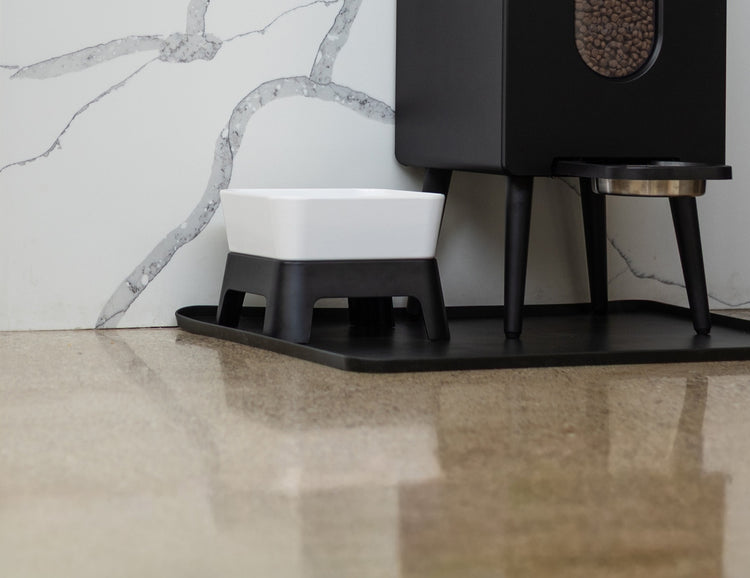
For a routine that includes dry food, the Houndsy Kibble Dispenser uses a standing-height manual crank and interchangeable serving bowls. It can make dispensing a consistent amount of kibble more convenient, but it does not determine the right portion for your dog. Keep homemade food refrigerated or frozen separately.
Keep a pantry backup without home canning
If pantry space is the reason you considered canning, a sealed commercial dog food can be a useful backup. Look for a product labeled complete and balanced for your dog’s life stage, and follow the storage and feeding directions on its package. (fda.gov)
Keep track of dates and rotate your supply. If your dog relies on a particular diet, ask your veterinarian what backup would be appropriate before an interruption makes the decision urgent.
Once a commercial can or pouch is opened, follow its refrigeration and use instructions. A sealed commercial product and an improvised home-canned mixture are not interchangeable: the commercial product has its own manufacturing and storage directions.
A simpler feeding plan
You don’t need a pantry full of homemade jars to make meal prep manageable. A veterinarian-reviewed recipe, labeled freezer portions and a suitable backup can make feeding day less complicated.
- Freeze homemade mixtures instead of guessing at a canning process.
- Count homemade additions as part of your dog’s daily food.
- Keep wet food and kibble in their appropriate storage conditions.
A routine you can repeat matters more than making every meal from scratch.
If kibble is part of your plan, consider the Houndsy Kibble Dispenser as a way to make the dry-food portion of mealtime easier.
FAQ
Can I pressure-can homemade dog food?
A pressure canner is necessary for tested low-acid canning processes, but it does not make an untested dog-food mixture safe by itself. We recommend freezing mixed homemade meals rather than applying a plain-meat processing time to them.
Can I can dog food with rice if I cook the rice first?
Cooking rice first does not establish a safe canning process for the finished mixture. Rice can change the mixture’s thickness and how heat moves through the jar. Refrigerate or freeze the prepared food instead.
How long can homemade dog food stay in the refrigerator?
Storage time depends on the ingredients and preparation. Ask your veterinarian for guidance on your specific recipe, keep the refrigerator at 40°F or colder, and freeze portions you won’t use soon.
Can I use homemade food as a kibble topper?
Yes, a safely prepared and stored homemade food can be used as a topper if it fits your dog’s feeding plan. Count it as part of the daily intake, and ask your veterinarian about the amount and ingredients if you’re unsure.