How to Train Your Dog to Eat Dry Food
- Houndsy
Table of Contents
- Introduction
- Why Some Dogs Resist Dry Food
- The Benefits of Switching to Dry Food
- Assessing Your Dog's Health First
- Step-by-Step Transition Strategy
- Making Dry Food More Appealing
- The Importance of Freshness
- Establishing a Strict Feeding Schedule
- Training Techniques and Positive Reinforcement
- Dealing with the "Hunger Strike"
- Creating a Design-Forward Feeding Station
- Troubleshooting Common Issues
- Maintaining the Routine Long-Term
- Conclusion
- FAQ
Introduction
You set the bowl down with a hopeful smile, but your dog just gives it a disinterested sniff and walks away. This scenario is a common frustration for many pet owners transitioning their dogs from wet food or home-cooked meals to kibble. We know that feeding your dog should be a moment of connection, not a source of daily stress or a messy chore. At Houndsy, we believe that every part of the dog care routine should be simple, consistent, and beautiful, and that starts with the Houndsy Kibble Dispenser.
This guide will walk you through the practical steps to help your dog embrace dry food. We will cover the psychological reasons behind why some dogs refuse dry food and provide a clear roadmap for a successful transition. By the end, you will have the tools to make mealtime the easiest part of your day. Teaching your dog to enjoy dry food is a journey of patience, routine, and understanding your pet's needs.
Why Some Dogs Resist Dry Food
Many dogs develop a preference for the texture and aroma of wet food early in life. Wet food often has a stronger scent, which is a major driver for a dog's appetite. Dry food, while nutritionally dense, can seem less exciting to a dog used to a softer, more fragrant diet. Understanding that this is a sensory preference rather than "naughtiness" is the first step toward a solution.
Texture plays a significant role in how a dog perceives their meal. If a dog has only ever eaten soft food, the "crunch" of kibble can feel foreign or even uncomfortable at first. This is especially true for older dogs or puppies with sensitive gums. Sometimes, a dog’s refusal to eat dry food is simply a matter of habit that needs to be gently reshaped.
Consistency in your feeding environment can also impact their willingness to try something new. If mealtime feels chaotic or the bowl is constantly moving, a dog may feel too anxious to experiment with a new food type. Creating a calm, predictable space is essential for any dietary change. We find that when the feeding routine is streamlined, dogs are much more receptive to new habits.
The Benefits of Switching to Dry Food
Dry food is often more convenient and cost-effective for the modern household. It is easier to store in bulk and stays fresh longer than opened cans of wet food. For many busy owners, the ability to quickly provide a balanced meal without the mess of cans is a significant lifestyle improvement.
Dental health is another common reason owners prefer kibble. The mechanical action of chewing dry food can help reduce plaque and tartar buildup on a dog’s teeth. While it is not a replacement for regular dental cleanings, it provides a daily boost to their oral hygiene.
Portion control is significantly easier with dry food. Measuring exact amounts ensures your dog maintains a healthy weight over time. Using our kibble dispenser makes this even more precise. It offers perfect portion control with every turn of the crank, removing the guesswork from your morning routine.
Assessing Your Dog's Health First
Before starting any new training or diet, ensure there are no underlying medical issues. If a dog suddenly stops eating dry food they previously enjoyed, it could indicate dental pain. Issues like broken teeth or gum disease make crunching painful. A quick check-up with your veterinarian can rule out these physical barriers.
Allergies or sensitivities can also manifest as a lack of appetite. If a specific brand of dry food makes your dog feel unwell, they will quickly learn to avoid it. Watch for signs of skin irritation or digestive upset. If your dog seems healthy but just disinterested, you can proceed with a behavioral training approach.
Key Takeaway: Always rule out dental pain or digestive issues with a veterinarian before assuming your dog is simply being a picky eater.
Step-by-Step Transition Strategy
A gradual transition is the most successful way to introduce dry food. Moving too fast can lead to digestive upset or a total refusal to eat. We recommend a ten-day plan to let your dog’s palate and stomach adjust. This slow approach builds confidence and reduces the likelihood of mealtime power struggles.
Step 1: The Initial Mix
Mix 10% dry food with 90% of their current wet food. Ensure the kibble is well-incorporated so they cannot easily pick around it.
Step 2: Increasing the Ratio
Every two days, increase the amount of dry food by roughly 20%. By day four, you should be at a 30/70 split.
Step 3: The Halfway Mark
Around day five or six, aim for a 50/50 mix. Observe your dog's stools to ensure their digestion is handling the change well.
Step 4: Finalizing the Switch
Continue increasing the kibble until the wet food is just a light "topper" or garnish. By day ten, most dogs are ready for 100% dry food.
Making Dry Food More Appealing
Aroma is the secret weapon when training a dog to eat dry food. You can boost the scent of kibble by adding a small amount of warm water or low-sodium broth. This softens the texture slightly and releases the fats and aromas that dogs find irresistible. If you want more ideas for boosting mealtime appeal, How to Make Dry Dog Food More Appealing is a helpful companion piece.
The temperature of the food can make a surprising difference. Slightly warming the kibble (or the water you add to it) mimics the temperature of fresh prey or warm home-cooked meals. Most dogs prefer food that is room temperature or slightly warmer, rather than cold from a storage area.
Quick Answer: To train a dog to eat dry food, use a gradual 10-day transition by mixing kibble with their current wet food. You can enhance the appeal by adding warm water or broth to soften the texture and increase the aroma.
Using Toppers Effectively
If your dog is particularly stubborn, a high-value topper can provide the necessary incentive. However, use these sparingly to avoid creating a dog that only eats when "extras" are provided.
If you want a deeper dive into flavor boosters, What to Add to Dry Dog Food for Picky Eaters pairs naturally with this approach.
| Topper Type | Benefit | Best For |
|---|---|---|
| Warm Water | Softens kibble, releases aroma | Transitioning from wet food |
| Low-Sodium Broth | Adds intense flavor | Very picky eaters |
| Plain Pumpkin | High fiber, aids digestion | Dogs with sensitive stomachs |
| Plain Yogurt | Probiotics, creamy texture | Dogs who love dairy scents |
The Importance of Freshness
Dogs have a sense of smell that is significantly more powerful than ours. If kibble has been sitting in an unsealed bag for weeks, the oils can become rancid. While we might not smell it, your dog certainly will. Stale food is one of the leading reasons dogs reject dry food.
Proper storage is not just about organization; it is about flavor preservation. Using a container with a high-quality seal keeps the kibble's original taste and nutritional profile intact. Our Houndsy dispenser features a BPA-free liner designed to keep up to 30 lbs of food fresh and protected. This ensures that the last bowl of the bag tastes just as good to your dog as the first one.
Establishing a Strict Feeding Schedule
Free-feeding can be a major obstacle when training a dog to eat dry food. If food is available all day, your dog never learns to appreciate the "value" of a meal. They may snack just enough to stay full without ever actually committing to the new food type. Scheduled feedings create a healthy "hunger drive" that encourages them to eat when the bowl is placed down.
Consistency builds trust and reduces mealtime anxiety. Aim to feed your dog at the same times every day. When a dog knows exactly when food is coming, they are more likely to engage with whatever is in the bowl. A structured routine signals to their body that it is time to eat, which naturally increases appetite.
The physical act of feeding should be comfortable for both of you. Bending down to scoop food from a heavy bag is a chore that can lead to inconsistent portions or spills. We designed our standing-height crank mechanism to solve this. It allows you to dispense the perfect amount of fresh kibble without the mess, making the routine a pleasure rather than a task.
Training Techniques and Positive Reinforcement
Treat dry food as a reward during training sessions. If your dog thinks kibble is only for mealtime, they may view it as "boring." By using individual pieces of dry food as treats for sitting or staying, you change their association with the food. It becomes a high-value prize rather than a chore they have to finish.
Hand-feeding can be an effective way to bond and encourage eating. If your dog is hesitant to eat from a bowl, try offering a few pieces of kibble from your hand. This personal interaction can reduce the fear of the new food and make the process feel like a shared activity.
Praise your dog when they show interest in the dry food. Positive reinforcement goes a long way. When you see them taking a few bites of kibble, offer verbal praise or a gentle pet. You want them to associate the act of eating dry food with a positive, happy environment.
Dealing with the "Hunger Strike"
It is common for dogs to hold out for their favorite wet food. This is often referred to as a "hunger strike." Most healthy dogs will not starve themselves. If your dog refuses to eat, leave the bowl down for 15 to 20 minutes, then pick it up until the next scheduled mealtime.
Do not give in with extra treats or table scraps during this period. If you provide snacks because you are worried they didn't eat their kibble, you are accidentally teaching them that refusing dinner leads to better rewards. Stay firm and consistent. A healthy dog can safely miss a meal or two while they learn the new routine.
Monitor their energy levels and behavior. If your dog remains active and alert, the hunger strike is likely a behavioral test. If they become lethargic or show other signs of illness, consult your veterinarian. Most "picky" dogs will eventually eat the dry food once they realize no other options are coming.
Creating a Design-Forward Feeding Station
The environment where your dog eats matters more than you might think. Many traditional pet feeders are made of loud, flimsy plastic that can slide around or make startling noises. A stable, secure feeding station helps a dog feel safe while they eat. If the bowl is rattling or moving, a hesitant eater may be put off entirely.
Good design integrates pet care into the heart of the home. Most pet products are tucked away in a utility closet or hidden in a corner because they clash with modern decor. However, a product you are proud to display is one you will use more consistently. We believe that a beautiful home and a well-fed dog should go hand-in-hand.
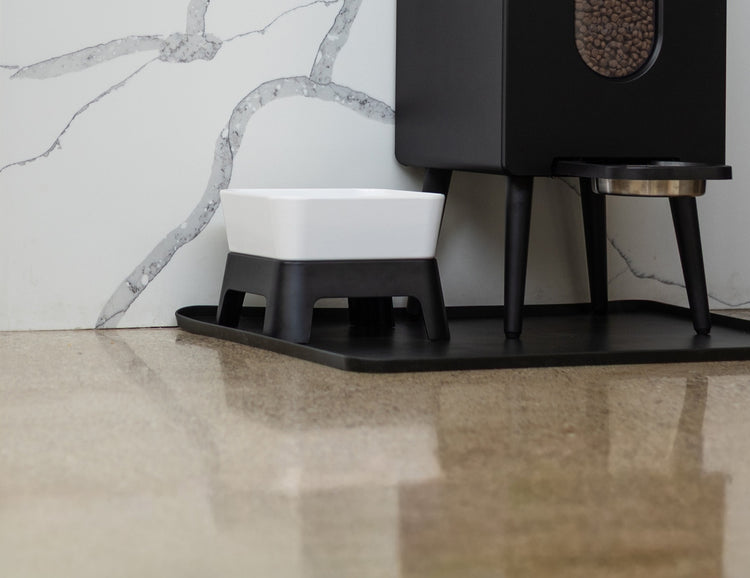
The mid-century modern design of the Houndsy Kibble Dispenser complements your living space. When the feeding station feels like a deliberate part of your home, the routine feels more intentional. It creates a calm, permanent "anchor" for your dog's daily habits, which is especially helpful when introducing new foods.
Troubleshooting Common Issues
The Fast Eater
Some dogs transition so well to dry food that they begin to eat it too quickly. This can lead to digestive issues or "scarf and barf." If this happens, consider using a slow-feeder bowl or a puzzle toy to pace their eating.
The Toddler or Curious Pet Factor
If you have a busy household, other pets or children might interfere with the transition. They might try to steal the kibble or accidentally trigger the dispenser. Our auto-locking mechanism prevents accidental dispensing, ensuring that the food stays in the container until you are ready to feed your dog.
Dealing with Sensitive Stomachs
If your dog has a history of digestive upset, look for "limited ingredient" dry foods. These are often easier for dogs to process. During the transition, you can also add a spoonful of plain canned pumpkin to help soothe the digestive tract and provide extra fiber.
The Refusal to Crunch
If your dog eats the kibble only after it has been soaked for an hour, they may have a preference for softer textures. You can slowly reduce the soaking time over several weeks. Eventually, they will become accustomed to the crunch of the dry food.
Bottom line: Success in dry food training comes from a blend of high-quality food, a strict schedule, and a stress-free environment that encourages focused eating.
Maintaining the Routine Long-Term
Once your dog is successfully eating dry food, the goal is long-term consistency. Fluctuating schedules or changing brands frequently can reset their picky habits. Stick to a high-quality kibble that your dog enjoys and stay consistent with your feeding times.
Regularly inspect your storage solutions. Even the best dry food will lose its appeal if it gets damp or is exposed to pests. Keeping your kibble in a dedicated, sealed system ensures the quality remains high. This consistency is the key to preventing a relapse into picky eating habits.
Celebrate the simplicity of your new routine. No more messy cans to recycle or half-used containers in the fridge. With the right tools and a bit of patience, you have transformed a daily frustration into a streamlined, elegant part of your day. You can now enjoy the peace of mind that comes with knowing your dog is getting balanced nutrition in a way that fits your lifestyle.
Conclusion
Training your dog to eat dry food is one of the most practical steps you can take for a cleaner, more organized home life. By using a gradual transition, enhancing the food’s aroma, and maintaining a strict schedule, you set your dog up for success. Remember that consistency is the foundation of any good habit. Our mission at Houndsy is to make these daily rituals as beautiful and effortless as possible. We want you to spend less time worrying about the "how" of feeding and more time enjoying the company of your pet.
Key Takeaway: A successful transition relies on freshness, portion control, and a calm environment—all of which are supported by a high-quality feeding system.
If you are ready to elevate your dog’s feeding experience, the Houndsy Kibble Dispenser with our 30-day risk-free guarantee is designed to help. It combines mid-century modern aesthetics with practical features like the standing-height crank and an auto-locking mechanism. Transitioning to dry food has never been more convenient or stylish.
FAQ
How long does it typically take to train a dog to eat dry food?
Most dogs can successfully transition to dry food within 7 to 10 days using a gradual mixing method. This timeframe allows their digestive system to adjust and prevents them from feeling overwhelmed by the new texture. If your dog is particularly stubborn, it may take up to two weeks of consistent effort and a strict feeding schedule.
Can I mix wet and dry food forever?
Yes, many owners choose to mix wet and dry food permanently to provide variety and extra hydration. However, if your goal is to move to 100% dry food for convenience or dental health, you should slowly decrease the amount of wet food over time. If you do keep a mix, ensure you are still practicing strict portion control to avoid overfeeding.
What should I do if my dog refuses to eat for more than a day?
If a healthy dog refuses food for 24 hours but is otherwise acting normally, it is usually a behavioral test. Continue to offer the dry food at scheduled times and remove it after 20 minutes. However, if they skip meals for more than 48 hours, or if they show signs of lethargy or vomiting, you should contact your veterinarian immediately.
Why does my dog only eat dry food if I hand-feed them?
Hand-feeding provides comfort and positive reinforcement, which your dog may have come to rely on. To break this habit, start by hand-feeding a few pieces, then placing the rest in their bowl while you stay nearby. Gradually increase the distance between yourself and the bowl over several days until they are comfortable eating independently.