What Is Best Wet Dog Food for Your Healthy Hound?
- Houndsy
Table of Contents
- Introduction
- Why Pet Owners Choose Wet Dog Food
- How to Read a Wet Dog Food Label
- Matching Wet Food to Your Dog’s Needs
- Addressing Specific Health Concerns
- The Strategy of Mixed Feeding
- Step-by-Step: Transitioning to a New Wet Food
- Storing and Serving Wet Dog Food Safely
- Common Mistakes to Avoid
- Integrating Routine and Design
- Conclusion
- FAQ
Introduction
We have all stood in the pet food aisle, staring at rows of colorful cans and pouches, wondering which one will actually help our dogs thrive. Perhaps your dog has recently started turning their nose up at dry kibble. Or maybe your veterinarian suggested adding more moisture to their diet to support kidney health. It is a common moment of uncertainty because every brand claims to be the "best." At Houndsy, we believe that understanding what goes into your dog's bowl is just as important as the routine you build around it.
The search for the best wet dog food usually begins with a specific need. You might be looking to entice a picky eater, manage a sensitive stomach, or support a senior dog with dental issues. While dry food offers convenience, wet food provides a level of hydration and palatability that is hard to match. This complete wet food guide will help you navigate nutritional labels, understand ingredient quality, and find a formula that fits your dog’s unique lifestyle.
Finding the right food is the first step toward a healthier, happier dog. We want to simplify the complex world of canine nutrition so you can make an informed choice with confidence.
Quick Answer: The best wet dog food is one that meets AAFCO nutritional standards, lists a specific animal protein as the first ingredient, and is tailored to your dog’s specific life stage. It should be free from artificial preservatives and provide a balanced ratio of protein, healthy fats, and moisture.
Why Pet Owners Choose Wet Dog Food
Many dog owners choose wet food because it solves practical daily feeding problems. The most immediate benefit is hydration. Most wet dog foods contain between 75% and 85% water. This is a significant jump compared to the 10% moisture typically found in dry kibble. For dogs that are reluctant to visit the water bowl, wet food helps keep their systems running smoothly.
Palatability is another major factor. The cooking process for canned food preserves the natural aromas and textures of the meat. This makes it far more appealing to dogs who are "finicky" or those who have lost some of their sense of smell as they age. If you find yourself adding toppers to dry food just to get your dog to eat, a high-quality wet food may be a better solution.
Benefits for Seniors and Puppies
Wet food is often the preferred choice for the most sensitive life stages. Puppies have small teeth and high energy needs. They benefit from the soft texture and nutrient density of wet formulas. Seniors often struggle with dental disease or missing teeth. This makes hard kibble difficult to chew. The soft consistency of a pâté or stew ensures they get the calories they need without discomfort.
Weight Management and Carbohydrates
Wet food is often naturally lower in carbohydrates than dry food. The canning process does not require the same starches used to bind kibble together. This means wet food is often higher in protein and lower in unnecessary fillers. This can be beneficial for dogs prone to weight gain or those requiring a low-glycemic diet. For additional guidance, read this guide on how much kibble to feed your dog.
Key Takeaway: Wet food is a functional choice for hydration and protein-focused nutrition that benefits dogs at every life stage, especially those with dental issues or picky appetites.
How to Read a Wet Dog Food Label
When you are looking for the best wet dog food, the label is your most important tool. However, pet food marketing can be confusing. You need to know which phrases carry weight and which are just for show.
The AAFCO Statement of Nutritional Adequacy
The very first thing to check is the AAFCO statement. AAFCO stands for the Association of American Feed Control Officials. This statement confirms that the food is "complete and balanced." A complete food contains every nutrient your dog needs in the correct proportions. If a label says the food is for "intermittent or supplemental feeding only," it should not be your dog's primary source of nutrition.
The First Three Ingredients
Ingredients are listed by weight before cooking. You want to see a named animal protein as the first ingredient. Look for "Beef," "Chicken," or "Lamb" rather than generic "Meat" or "Animal Fat." A specific name indicates a higher standard of sourcing and transparency.
- Named Proteins: Look for turkey, salmon, or duck.
- Healthy Fats: Look for fish oil or flaxseed for skin and coat health.
- Whole Vegetables: Ingredients like carrots and peas provide natural vitamins.
Understanding By-Products
There is often debate around by-products. In high-quality wet foods, by-products often include organ meats like liver and heart. These are incredibly nutrient-dense and natural for dogs to eat. However, generic "meat by-products" are less desirable because the source animal is unknown.
| Feature | High-Quality Wet Food | Lower-Quality Wet Food |
|---|---|---|
| First Ingredient | Named meat (e.g., Chicken) | Generic "meat" or water |
| Grains/Fillers | Whole grains or grain-free | Corn, wheat, or soy fillers |
| Preservatives | Natural (e.g., Vitamin E) | Artificial (e.g., BHA, BHT) |
| Texture | Recognizable meat/veg | Uniform, rubbery loaf |
Matching Wet Food to Your Dog’s Needs
Not every dog has the same nutritional requirements. The best food for a Great Dane puppy is not the same as the best food for an aging Pomeranian. You must match the formula to your dog's age, breed, and activity level.
Puppies (Growth and Development)
Puppies need energy-rich, nutrient-dense food to support rapid growth. Wet food formulated for puppies contains higher levels of protein, calories, and essential minerals like calcium. Look for labels that mention "Growth" or "All Life Stages."
Adult Dogs (Maintenance)
For adults, the goal is maintaining a healthy weight and overall vitality. Look for wet food that provides balanced nutrition without excess calories. If your dog is highly active, they may need a higher protein percentage. If they are a "couch potato," a weight-management formula might be best.
Senior Dogs (Longevity and Comfort)
Older dogs benefit from softer food due to potential dental issues. Senior-specific wet foods often include joint-supporting nutrients. Look for added glucosamine, chondroitin, and omega-3 fatty acids to help with mobility.
Bottom line: Always choose a food formulated for your dog's specific life stage to ensure they receive the correct balance of vitamins and minerals.
Addressing Specific Health Concerns
Sometimes, the best wet dog food is a specialized one. If your dog has health issues, your veterinarian may recommend a specific diet to manage symptoms.
Sensitive Stomachs and Digestion
For dogs that experience frequent digestive upset, a limited ingredient diet is often the best path. These formulas use a single protein source and a single carbohydrate source. This minimizes the risk of a reaction. Many owners find that wet foods with pumpkin or sweet potato help firm up stools and reduce gas.
Allergies and Skin Issues
If your dog is constantly itching, they might have a sensitivity to common proteins like chicken or beef. Many premium wet food brands offer "novel proteins." These include venison, rabbit, or whitefish. Switching to a protein your dog has not eaten before can often clear up skin irritations.
Myth: Wet food causes more tooth decay than dry food. Fact: While kibble has a slight abrasive effect, it is not a substitute for dental care. The best way to prevent decay is regular brushing and professional cleanings, regardless of food type.
The Strategy of Mixed Feeding
You do not have to choose strictly between wet and dry food. In fact, many dog owners find that a "mixed feeding" routine provides the best of both worlds. You get the nutritional density of dry food combined with the hydration and flavor of wet food. For more perspective, explore this guide to feeding your dog only wet food.
Mixed feeding requires a bit more planning to ensure consistency. If you are adding wet food to a bowl of kibble, you must adjust the portions of both. This prevents accidental weight gain. We believe that a reliable routine is essential for maintaining your dog's health.
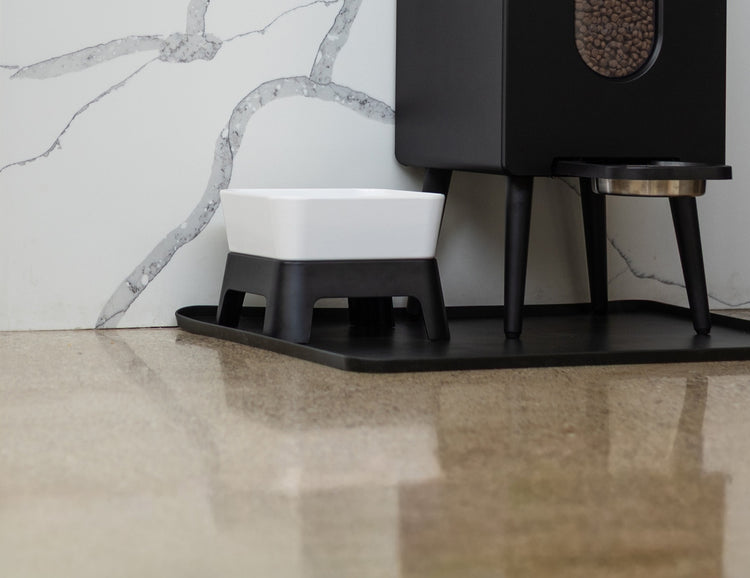
The Houndsy Kibble Dispenser was designed to make the dry half of this equation effortless. When you are managing messy wet food cans, having a system that provides perfect portion control for your kibble simplifies the process. It allows you to keep your dry food fresh and organized in a beautiful mid-century modern cabinet. The standing-height crank means you can dispense the base of their meal without bending over, leaving you more energy to focus on the fresh additions your dog loves.
Step-by-Step: Transitioning to a New Wet Food
If you are switching brands or moving from dry to wet food, a slow transition is vital. A dog’s digestive system needs time to adapt to new moisture levels and protein concentrations.
- Days 1–2: Mix 25% of the new wet food with 75% of the current food.
- Days 3–4: Move to a 50/50 split between the old and new food.
- Days 5–6: Increase to 75% new food and 25% old food.
- Day 7: Feed 100% of the new wet food.
Watch for changes in your dog. During this week, keep an eye on their energy levels and stool consistency. A small amount of softness is normal. However, persistent diarrhea means the change is happening too fast or the food does not agree with them.
Storing and Serving Wet Dog Food Safely
Unlike dry food, which can sit in a bag for weeks, wet food has a very short shelf life once opened. Proper handling is required to prevent bacteria growth and food waste.
Refrigeration is Mandatory
Once a can or pouch is opened, it must be covered and refrigerated. Use a silicone lid or a reusable airtight container. Most wet food stays fresh in the fridge for about three to five days. If you cannot finish a large can in that time, consider buying smaller portions.
The Two-Hour Rule
Do not leave wet food in your dog's bowl for more than two hours. At room temperature, moisture-rich food becomes a breeding ground for bacteria. If your dog has not finished their meal within that window, discard the leftovers and wash the bowl thoroughly.
Warming it Up
Most dogs do not enjoy cold food straight from the refrigerator. Adding a splash of warm water can "wake up" the aromas and make the meal more inviting. You can also let the portion sit at room temperature for a few minutes before serving, but never microwave the food in the original metal can.
Common Mistakes to Avoid
Even the most well-intentioned dog owners can make mistakes when choosing a wet food. Avoiding these pitfalls will save you money and keep your dog healthier.
Ignoring the feeding guidelines. Wet food is very calorie-dense. It is easy to look at a small amount of food and think your dog needs more. Always follow the guidelines on the label based on your dog's ideal weight, not their current weight.
Buying "mixers" by mistake. Some wet foods are labeled as "toppers" or "complementary." These are not nutritionally complete. If you feed these as a primary meal, your dog will miss out on essential minerals like taurine or calcium. Always look for the word "complete" on the package.
Focusing only on the price tag. While budget is a reality, the cheapest wet foods are often filled with water and thickeners like carrageenan. You might find you have to feed twice as much of a cheap food to get the same nutrition as a premium one. In the long run, higher-quality food often costs the same per meal because it is more nutrient-dense.
Integrating Routine and Design
At the end of the day, the best food is the one that works for your dog’s health and fits into your lifestyle. We know that feeding can be a messy chore involving heavy bags and smelly cans. We believe your dog’s feeding station should complement your home, not clutter it.
Our goal is to help you create a feeding routine that is convenient, consistent, and beautiful. By pairing a high-quality wet food with a well-designed dispensing system, you create a ritual you can be proud of. Our standing-height kibble dispenser keeps 25–30 lbs of kibble fresh and sealed in a BPA-free liner, while the auto-locking mechanism keeps curious pets out of the supply. This level of organization makes it much easier to manage the daily addition of fresh wet food.
Key Takeaway: Elevating your dog’s nutrition is easiest when the feeding process is simplified. A combination of premium ingredients and a well-organized feeding station creates a sustainable, healthy routine.
Conclusion
Finding the best wet dog food is a journey of discovery. It requires looking past the marketing and focusing on the ingredients that truly matter: named proteins, healthy fats, and a balance of essential vitamins. Whether you are feeding a growing puppy or a senior who needs a softer touch, the right wet food can drastically improve their quality of life.
Remember that consistency is the foundation of good health. A stable feeding schedule, paired with high-quality ingredients and a clean, organized feeding environment, will keep your dog's tail wagging for years to come. If you are ready to upgrade your dog's mealtime experience, we invite you to explore our kibble dispenser. With our 30-day risk-free guarantee, you can see for yourself how design and ease can change your daily routine.
FAQ
Is wet food better for dogs than dry food?
Neither is strictly better for every dog. Wet food offers superior hydration and is often more palatable for picky eaters. Dry food is more cost-effective and easier to store. Many veterinarians recommend a mix of both to provide a variety of textures and benefits.
How long can wet dog food stay in the bowl?
You should discard any wet food that has been sitting in the bowl for more than two hours. Because of its high moisture content, it can quickly grow bacteria at room temperature. Always wash the bowl with soap and water after each wet food meal.
Can I mix wet dog food with dry kibble?
Yes, mixing wet and dry food is a popular way to enhance flavor and hydration. When doing this, make sure to adjust the portions of both to avoid overfeeding. A common method is to replace a portion of the dry kibble with an equivalent caloric amount of wet food. The portion-controlled dispenser can help keep the dry portion consistent.
Does wet food cause weight gain in dogs?
Wet food does not inherently cause weight gain, but it is very palatable, which can lead to overeating. Because it feels like a smaller volume than kibble, owners sometimes overserve. As long as you follow caloric guidelines and monitor your dog’s body condition, wet food can be part of a healthy weight-management plan.
To learn more about the people and design philosophy behind Houndsy, visit our brand story.