Why Do Dogs Eat Their Food So Fast and How to Slow Them Down
- Houndsy
Table of Contents
- Introduction
- The Evolutionary Drive Behind the "Scarf and Barf"
- Environmental and Behavioral Triggers
- Why Eating Too Fast is a Health Risk
- Medical Causes for Increased Appetite
- Practical Ways to Slow Down the Pace
- The Importance of Routine and Consistency
- How Consistency and Design Improve Mealtime
- Conclusion
- FAQ
Introduction
You’ve just set the bowl down, and before you can even stand back up, the food is gone. It is a sound many of us know all too well—a rhythmic, high-speed vacuuming noise that leaves you wondering if your dog even tasted a single bite. This "scarf and barf" routine is more than just a quirky habit; for many owners, it is a source of genuine concern. We worry about choking, the inevitable post-meal hiccups, or the more serious digestive issues that can follow a frantic meal.
At Houndsy, we believe that feeding your dog should be a calm, consistent, and beautiful part of your daily rhythm. It shouldn't feel like a race or a chore. When a dog "inhales" their food, it often disrupts the peace of the home and leaves us feeling like we are failing to provide a relaxing environment. This guide to slowing down fast eating will explore the biological and psychological reasons behind this behavior and offer practical, design-friendly solutions to help your dog slow down.
Understanding the "why" is the first step toward a more mindful feeding routine. Whether your dog is a rescue with a history of food scarcity or a pampered pup who simply loves their kibble a bit too much, there are many ways to bring balance back to the bowl. Our goal is to help you move from a frantic feeding frenzy to a controlled, healthy experience that fits perfectly into your home.
The Evolutionary Drive Behind the "Scarf and Barf"
To understand why your dog treats every meal like their last, we have to look back at their ancestors. In the wild, food is a finite and unpredictable resource. When a pack of wolves takes down a meal, there is no guarantee when the next one will come. This creates an evolutionary pressure to eat as much as possible, as quickly as possible, before a more dominant pack member—or a different predator—can take it away.
Survival Instincts and Pack Mentality
Domesticated dogs have carried this "survival of the fastest" instinct into our living rooms. Even if your dog has never missed a meal in their life, their DNA is still whispering that they need to secure their resources. This is particularly common in puppies who grew up in large litters. When seven or eight hungry puppies are all vying for the same milk or the same bowl of softened kibble, the ones who eat the fastest are the ones who grow the strongest.
The Taste Bud Discrepancy
Another surprising reason dogs eat so fast is that they simply don't experience food the way we do. Humans have roughly 9,000 taste buds, allowing us to savor complex flavors and textures. Dogs, on the other hand, have only about 1,700 to 2,000 taste buds. While they have an incredible sense of smell that draws them to the bowl, the actual "tasting" part of the meal is secondary to the "filling" part. For a dog, eating is often more about fuel and satiety than it is about a culinary experience.
Key Takeaway: Your dog isn't being rude or ungrateful; they are following an ancient biological blueprint that prioritizes speed to ensure survival and resource security.
Environmental and Behavioral Triggers
While biology sets the stage, the environment often provides the cue for a dog to speed up. Our homes are busy places, and various stressors can inadvertently signal to a dog that they need to hurry.
The Pressure of Multi-Pet Homes
The most common environmental trigger is the presence of other animals. Even if your dogs are best friends, the mere presence of another "competitor" in the room can trigger a fast-eating response. This is known as social facilitation. One dog sees the other eating and feels a subconscious pressure to finish their own portion first to protect it, or perhaps to see if they can scavenge whatever is left in the other dog's bowl.
The "Rescue Dog" Mindset
Dogs that have spent time in shelters or as strays often struggle with food insecurity. If a dog has ever truly wondered where their next meal was coming from, that trauma can manifest as frantic eating. Even years after being adopted into a loving home, these dogs may still feel a deep-seated need to "inhale" their food. This behavior is often accompanied by resource guarding, where the dog becomes tense or aggressive if anyone approaches them while they eat.
Stressful Feeding Locations
Sometimes, the location of the feeding station itself is the problem. If a dog is fed in a high-traffic area—like a narrow hallway or right next to a noisy mudroom door—they may feel exposed. Eating is a vulnerable act in the animal kingdom. A dog who feels they might be interrupted or "snuck up on" will naturally try to finish their meal quickly so they can return to a state of high alert.
Why Eating Too Fast is a Health Risk
It might seem like a harmless habit, but eating at lightning speed can lead to several health complications. Some are minor inconveniences, while others are life-threatening emergencies.
The Danger of Bloat (GDV)
The most significant risk of fast eating is Gastric Dilatation-Volvulus (GDV), commonly known as bloat. When a dog gulps down food, they also swallow a significant amount of air. This air can cause the stomach to expand (dilate) and, in some cases, twist (volvulus). A twisted stomach traps gas and cuts off blood flow, which is a critical medical emergency.
Myth: Only large, deep-chested breeds like Great Danes or Standard Poodles get bloat. Fact: While large breeds are at higher risk, any dog that swallows excessive air by eating too quickly can suffer from gastric distress or bloat.
Choking and Digestive Distress
Dogs that don't chew their food are at a much higher risk of choking. Kibble is designed to be broken down, but a dog in a hurry may swallow several pieces at once, which can get lodged in the esophagus. Furthermore, unchewed food is harder for the stomach to process, leading to the "scarf and barf" phenomenon where the dog vomits up completely undigested food minutes after eating. This isn't just messy; it prevents the dog from actually absorbing the nutrients they need.
Medical Causes for Increased Appetite
If your dog has always been a slow eater and suddenly starts acting like they are starving, it is time for a veterinary check-up. Several medical conditions can cause a sudden, intense increase in appetite (polyphagia).
- Parasites: Intestinal worms can "steal" the nutrients from your dog's food, leaving them feeling constantly hungry regardless of how much they eat.
- Diabetes: Much like in humans, diabetes can prevent a dog's body from properly using the glucose in their blood, signaling the brain that they need more food.
- Cushing’s Disease: This condition causes an overproduction of cortisol, which can lead to a ravenous appetite.
- Thyroid Issues: A malfunctioning thyroid can send metabolic signals into overdrive.
Bottom line: A sudden change in eating speed is a medical red flag. If your dog's "hunger" seems insatiable or is accompanied by weight loss, consult your veterinarian.
Practical Ways to Slow Down the Pace
If you've ruled out medical issues, the next step is to change the way you deliver the food. You don't need to accept a kitchen floor covered in spilled kibble and a dog who is constantly choking.
Step 1: Manage the Environment
Create a dedicated, quiet space for meals. If you have multiple pets, feed them in separate rooms or behind baby gates. Removing the "audience" removes the competition. By creating a calm environment, you allow your dog's nervous system to shift from "fight or flight" to "rest and digest."
Step 2: Use Obstacles
Introduce a slow-feeder bowl or a DIY alternative. These bowls use ridges and mazes to prevent the dog from taking large mouthfuls. If you don't want to buy a new bowl, you can place a clean, large rock or an upside-down ceramic ramekin in the middle of their current bowl. They will have to move the obstacle around to get to the kibble, naturally slowing their pace.
Step 3: Change the Texture
Add a splash of water or low-sodium broth to the kibble. This does two things: it makes the food harder to "gulp" because it becomes a bit slippery, and it increases the volume of the meal, helping the dog feel fuller. It also forces them to lap up the liquid rather than just inhaling dry pellets. For more ideas, explore this guide to giving kibble to dogs.
Step 4: Scatter Feeding
Ditch the bowl entirely. If the weather is nice, scatter your dog's meal across the grass in the backyard. If you’re indoors, use a "snuffle mat" or even just spread the kibble across a large baking sheet. This turns mealtime into a foraging game. It engages their nose and brain, making the meal last ten minutes instead of ten seconds.
Quick Answer: Dogs eat fast due to evolutionary instincts, competition with other pets, or underlying health issues. To slow them down, try using slow-feeder bowls, splitting meals into smaller portions, or using a consistent feeding routine to reduce anxiety.
The Importance of Routine and Consistency
One of the biggest drivers of food anxiety is inconsistency. If a dog isn't sure when their next meal is coming, they are more likely to stress about the one in front of them. Establishing a rock-solid routine tells your dog's brain that food is a guaranteed resource.
Consistency reduces the "scarcity mindset." When your dog knows that food appears at 7:00 AM and 6:00 PM every single day, their biological clock begins to anticipate the meal. They no longer feel the frantic need to "stock up" because the pattern has proven itself reliable over time.
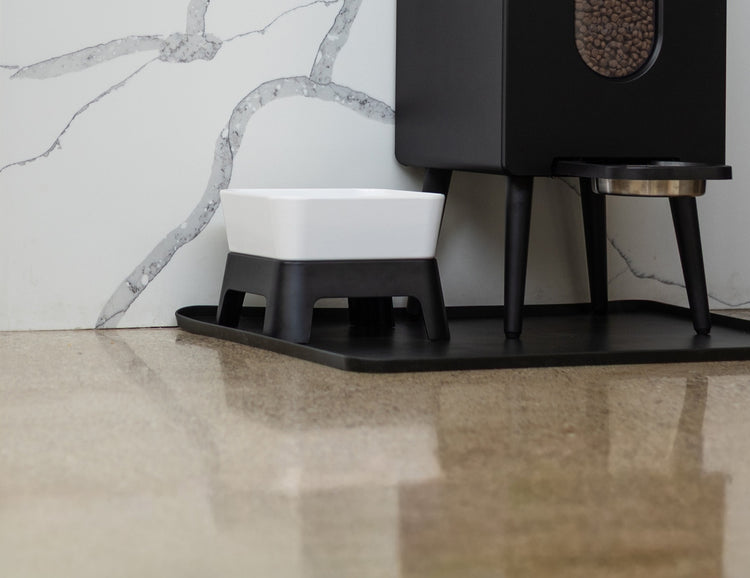
This is where your feeding setup plays a major role. A cluttered kitchen or a hidden bag of kibble in a dark closet makes feeding feel like a chore for you, which can lead to skipped or late meals. We designed the Houndsy Kibble Dispenser to solve this exact problem. By turning the bag of dog food into a beautiful piece of furniture, you can keep the feeding station right where life happens.
Our hero product, the Houndsy Kibble Dispenser, features a standing-height crank mechanism that eliminates the need for bending and scooping. This makes it incredibly easy to maintain a consistent schedule. Because the dispenser provides perfect portion control with every turn of the crank, you can be sure your dog is getting the exact amount they need, every single time. This level of predictability is the ultimate cure for mealtime anxiety.
How Consistency and Design Improve Mealtime
Many dog owners view the dog bowl as something to be hidden away when guests arrive. It’s often a plastic dish on a stained mat in a corner of the laundry room. But we believe that the objects we use every day should bring us joy and complement our homes. When you invest in a standing-height kibble dispenser, you aren't just buying a container; you are elevating the ritual of care.
The mid-century modern design of our dispenser is meant to be shown off. When your feeding station is a point of pride in your kitchen or dining area, you are more likely to engage with the feeding process. You’ll notice the auto-locking mechanism that keeps curious toddlers (or particularly clever dogs) out of the stash, and you’ll appreciate the BPA-free liner that keeps that 25–30 lb of kibble as fresh as the day you opened the bag.
Slowing down your dog's eating isn't just about the bowl; it’s about the entire experience. A dog that feels secure in their home, fed by a calm owner on a consistent schedule, is a dog that can finally learn to relax at the bowl.
Key Takeaway: A beautiful, consistent feeding environment reduces pet anxiety and makes it easier for owners to maintain the routines that keep dogs healthy.
Conclusion
Seeing your dog rush through their meal can be stressful, but it is a challenge that is well within your reach to solve. By understanding the evolutionary instincts at play and recognizing the environmental triggers in your home, you can take simple, effective steps to slow them down. Whether you choose to use a slow-feeder, try scatter feeding, or simply move the bowl to a quieter room, the goal is the same: a safer, more enjoyable mealtime.
We are dedicated to making those daily moments easier and more beautiful. The Houndsy Kibble Dispenser was created to bring consistency and elegance to the feeding experience, helping you move away from the mess of scoops and bags and toward a streamlined, reliable routine. With its perfect portion control and standing-height ease, it’s a tool designed to help both you and your dog find your rhythm.
If you are ready to transform your kitchen and your dog's mealtime behavior, we invite you to try our dispenser with a 30-day risk-free guarantee. We are confident that once you experience a more convenient, consistent way to feed, you’ll never want to go back to the old way.
- Rule out medical issues first if the behavior is new or extreme.
- Create a calm environment by feeding in a quiet, low-traffic area.
- Slow the physical pace using obstacles or hydration.
- Commit to a routine to eliminate food-related anxiety.
FAQ
Is it dangerous if my dog doesn't chew their kibble?
Yes, it can be. While dogs' digestive systems are capable of breaking down whole kibble, the primary risk is choking or aspirating (inhaling) the food into their lungs. Swallowing large amounts of unchewed food also contributes to air intake, which increases the risk of bloat.
Can a slow-feeder bowl actually prevent bloat?
While no bowl can 100% guarantee a dog won't get bloat (as genetics and overall health play a role), slow-feeders are highly effective at reducing the amount of air a dog swallows. By forcing the dog to take smaller, more frequent bites, you significantly lower the pressure on the stomach.
Why does my dog act like they are starving even after eating?
This could be a behavioral habit from their past, or it could be related to their diet's nutritional density. If the food is low in fiber or high in "fillers," they may not feel physically full. However, if the hunger is sudden and intense, consult a vet to rule out parasites or metabolic issues.
How many times a day should I feed a fast eater?
Splitting their daily food into three or four smaller meals instead of one or two large ones is highly recommended. Smaller portions are easier to digest, lead to less air intake per sitting, and help keep the dog's blood sugar and satiety levels more stable throughout the day. This scheduled-feeding guide can help you build a more consistent routine.