Has Costco Kirkland Dog Food Changed Recipe?
- Houndsy
Table of Contents
- Introduction
- The Reality of Large-Scale Dog Food Manufacturing
- Identifying Signs of a Recipe Change
- Recent Reports from the Costco Community
- Why Consistency in Feeding Matters
- Comparing Kirkland Signature Lines
- How to Manage a Recipe Change
- Sourcing and Safety Concerns
- Designing a Better Feeding Experience
- Troubleshooting a Finicky Eater
- The Importance of the 30-Day Window
- FAQ
Introduction
You reach for the familiar 40-pound bag at the warehouse, haul it home, and pour it into your storage container. But this time, something feels different. Maybe the kibble is a shade darker than the last batch, or perhaps your dog—usually a vacuum for anything edible—hesitates for a split second before eating. At Houndsy, we hear these stories often from dedicated dog owners who rely on consistency to keep their pets healthy and their routines simple.
When a staple like Kirkland Signature dog food shows signs of change, it naturally sparks a wave of questions. Is it a new formula? Did they switch manufacturers? Or is it just a temporary variation in sourcing? We want to help you navigate these uncertainties so you can feel confident about what is ending up in your dog’s bowl.
This post covers the recent reports surrounding Kirkland dog food recipe changes, how to identify if your specific bag has been reformulated, and what these shifts mean for your dog's nutrition. We will also look at how maintaining a consistent feeding environment can help you spot these changes before they become a problem.
Quick Answer: While Costco rarely announces minor ingredient tweaks, pet owners frequently report variations in kibble color, size, and smell. These are often due to natural ingredient sourcing shifts by the manufacturer, Diamond Pet Foods, rather than a total recipe overhaul, though packaging updates often signal a deeper reformulation.
The Reality of Large-Scale Dog Food Manufacturing
To understand if a recipe has changed, we first have to look at how these products are made. Kirkland Signature dog food is produced by Diamond Pet Foods, one of the largest private-label manufacturers in the country. They produce a wide variety of brands, which means they are constantly sourcing massive quantities of chicken, lamb, salmon, and grains.
Because Diamond relies on natural ingredients, the raw materials can vary by season or region. For example, the fat content in chicken or the color of a particular harvest of sweet potatoes isn't always identical. These natural fluctuations often translate into a bag of kibble that looks or smells slightly different from the one you bought a month ago, even if the "recipe" on paper remains the same.
However, a true recipe change is a deliberate shift in the ingredient list or the nutritional breakdown. This might happen if a specific ingredient becomes too expensive or if the manufacturer finds a way to improve the nutritional profile. Most major brands will update their packaging to reflect a "New and Improved" formula, but "stealth" changes—where the label stays the same but the ratios shift slightly—are not unheard of in the industry.
Identifying Signs of a Recipe Change
If you suspect the food has changed, the first place to look is not the front of the bag, but the fine print on the back. Manufacturers are required to list ingredients in descending order of weight. If you see a shift in the first five ingredients, that is a significant change.
Look for Ingredient Splitting
One common tactic in the pet food industry is "ingredient splitting." This is when a manufacturer takes a single ingredient, like corn or peas, and lists it as several different items (e.g., pea flour, pea protein, and ground peas). This allows them to keep a meat source like "chicken" at the top of the list, even if the combined weight of the pea components actually outweighs the meat. If you notice new variations of the same ingredient appearing on your Kirkland bag, the recipe has likely been tweaked to favor different cost structures.
Variations in Kibble Physicality
Texture and density are often the first things pet owners notice. If the kibble feels more oily or, conversely, more dry and brittle, the fat application process may have changed. While this doesn't always mean the nutritional value has dropped, it can affect how your dog perceives the food. A change in density can also mean your dog is getting fewer or more calories per cup than they were previously.
Check the Guaranteed Analysis
The guaranteed analysis tells you the minimum percentages of protein and fat and the maximum percentages of fiber and moisture. If the protein drops by even one or two percent, or the fiber increases, the recipe has officially changed. These numbers are the manufacturer's promise of what is inside the bag, and they are harder to "fudge" than the descriptive ingredient list.
For more context on kibble composition and feeding consistency, explore this guide to choosing kibble for dogs.
Recent Reports from the Costco Community
In recent months, some Costco members have reported that specific formulas, such as the Nature’s Domain Salmon and Sweet Potato, have undergone shifts. Some owners have noted a stronger fish scent, while others have seen a change in the kibble size. In the standard Kirkland Signature Adult Dog (Chicken, Rice, and Vegetable) formula, there have been anecdotal reports of increased "kibble dust" at the bottom of the bags, which can suggest a change in the binding agents or the cooking temperature.
Key Takeaway: Anecdotal evidence from other owners is a great "early warning system," but always verify by comparing the labels of your old and new bags. Small variations in color are usually fine, but changes in the guaranteed analysis are a definitive sign of reformulation.
Why Consistency in Feeding Matters
When you are dealing with potential recipe changes, having a rock-solid feeding routine is your best defense. If your feeding process is inconsistent—if you use different scoops, feed at different times, or leave the bag open to the air—it becomes much harder to tell if a digestive upset is due to the food itself or a flaw in the routine.
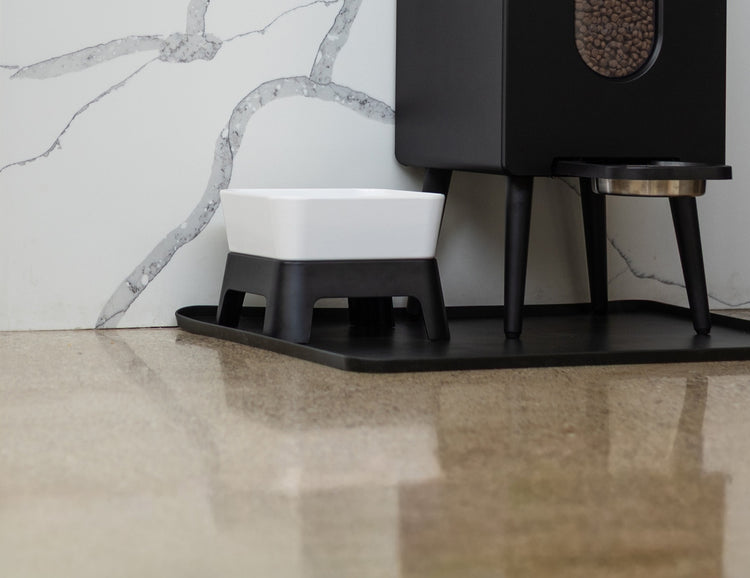
The Houndsy Kibble Dispenser was designed specifically to remove these variables. By using a standing-height crank mechanism, we ensure that you get a perfect, consistent portion every single time. There is no more guessing with a plastic scoop or bending over a heavy, dusty bag. When the portion is always the exact same size, you can more easily monitor your dog’s weight and appetite. If your dog suddenly leaves food behind, you will know immediately that it is likely the food or their health, not an accidental over-portion.
Consistency also extends to how the food is stored. A recipe change can be frustrating, but food that has gone stale due to poor storage is a much more common cause of "finicky" eating. We built our dispenser with a BPA-free liner that helps keep kibble fresh from the first crank to the last. This creates a controlled environment where the only variable is the food you put into it.
For additional storage guidance, read these dog food freshness and storage tips.
Comparing Kirkland Signature Lines
Costco offers several different tiers of dog food, and they don't all change at once. Understanding which "family" your food belongs to can help you track potential updates.
| Product Line | Primary Focus | Common Manufacturer Notes |
|---|---|---|
| Kirkland Signature (Blue/Red Bags) | Value & Quality | Traditional recipes using grains like rice and barley. |
| Nature's Domain (Organic/Grain-Free) | Specialty Nutrition | Often uses salmon, turkey, or beef with sweet potato. |
| Healthy Weight | Calorie Control | Higher fiber content, lower fat percentages. |
| Kirkland Signature ProCare | Specialized/Life Stage | Formulas for puppies or seniors with specific nutrient ratios. |
How to Manage a Recipe Change
If you have confirmed that the recipe has changed, or if your dog is reacting poorly to a new bag, you should treat it like you are switching to an entirely different brand. Even a small shift in protein sources or fiber types can cause gastrointestinal upset if introduced too quickly.
Step-by-Step: Transitioning to a New Bag
If your dog has a sensitive stomach and you notice a change in the food, do not simply switch over overnight. Follow this sequence:
Step 1: Save the old kibble. / Always try to keep about 25% of your old bag when you start a new one. This acts as a "safety buffer" in case the new bag is different.
Step 2: Start with a 75/25 mix. / For the first three days, mix three parts of the old food with one part of the new food. Monitor your dog for any signs of loose stools or gas.
Step 3: Move to a 50/50 split. / If your dog is doing well, move to an even split for the next three days. This gives their gut microbiome time to adjust to any new enzymes or fibers.
Step 4: Transition to 100% new food. / By the end of a week, you can safely move to the new bag entirely. This gradual process prevents the "shock" that often leads to owners thinking a food has "gone bad" when it has simply changed slightly.
If your dog becomes selective during the transition, these strategies for helping picky eaters may help.
Sourcing and Safety Concerns
One of the biggest concerns for Costco shoppers is where the ingredients come from. While Diamond Pet Foods is a US-based company with plants in Missouri, South Carolina, Arkansas, and California, they do source ingredients globally.
Myth: "Costco dog food is made in China." Fact: Kirkland Signature dog food is manufactured in the United States. While some minor vitamins or minerals may be sourced globally, the primary proteins and grains are generally sourced from the US and North America.
Costco has a rigorous quality control process, but no large-scale manufacturer is immune to recalls. If you suspect a recipe change is actually a safety issue, you can check the FDA’s pet food recall database. However, most of the "changes" owners see are simply the result of Diamond Pet Foods adjusting their formulas for cost or supply chain stability.
Designing a Better Feeding Experience
At Houndsy, we believe that feeding your dog should be the best part of your morning, not a chore involving a heavy bag in a dark pantry. Our mission is to simplify and elevate the dog feeding experience by making it convenient, consistent, and beautiful.
When you use our kibble dispenser, you are not just buying a tool; you are upgrading your home's aesthetic. Its mid-century modern design was created to complement your kitchen or mudroom rather than clashing with it. This design-forward approach means you can keep the feeder where you actually use it, making it easier to notice if the kibble looks different or if the "crank" feels different because of a change in kibble size.
Furthermore, we know that many Costco shoppers have busy households. Our dispenser features an auto-locking mechanism that prevents accidental dispensing by curious pets or toddlers. This level of control ensures that your dog gets exactly what they need, even if the recipe they are eating has shifted slightly.
Troubleshooting a Finicky Eater
If your dog stops eating after you open a new bag, it isn't always a recipe change. Before you return the bag to Costco, consider these factors:
- Oxidation: If the bag was sitting in the warehouse for too long or had a small tear, the fats may have oxidized, making the food taste "off."
- Bowl Cleanliness: Bacteria can build up in plastic or ceramic bowls. Ensure you are washing your dog's bowl daily.
- Environmental Stress: Changes in the home can affect appetite. A consistent routine helps mitigate this.
- Temperature: Very cold or very hot storage areas can change the texture and aroma of the kibble.
For more ideas, see these tips for keeping dry dog food fresh.
Bottom line: While Costco does not frequently announce recipe changes, they do happen. By keeping a close eye on the ingredient list and maintaining a consistent feeding routine with the right tools, you can manage these changes without stressing your dog.
The Importance of the 30-Day Window
Whenever you suspect a change in your dog's food, give it about 30 days to see how their coat, energy levels, and digestion settle. This is the same reason we offer a 30-day risk-free guarantee on our products. It takes time to see if a new routine or a new tool truly works for your family. If you find that the Kirkland food no longer suits your dog, Costco’s generous return policy is always there, but having a consistent way to dispense and store that food will make any transition much smoother.
We believe that better dog care is within easy reach. It starts with knowing what is in the bag and ends with a feeding ritual that respects both your dog’s health and your home's design. Whether the recipe stays exactly the same or evolves over time, our goal is to help you stay one step ahead.
Learn more about the mission behind Houndsy on our About Us page.
FAQ
How do I know for sure if my Kirkland dog food recipe changed?
The most reliable method is to compare the "Guaranteed Analysis" and the "Ingredient List" on the back of your current bag with a previous one. If you don't have the old bag, you can often find archived ingredient lists online or by contacting the customer service number listed on the packaging. Physical changes like kibble color, size, or oiliness are also strong indicators of a formula tweak.
Who actually manufactures Kirkland Signature dog food for Costco?
Kirkland Signature dog food is manufactured by Diamond Pet Foods. Diamond is a massive company that also produces its own lines, such as Diamond Naturals and Taste of the Wild. Because they manufacture at such a large scale across multiple facilities in the US, slight variations in sourcing and production can occur between different regions and batches.
My dog has a sensitive stomach; what should I do if the food looks different?
If you notice a change in the kibble's appearance or smell, treat it as a new food. Gradually transition your dog by mixing the "old" batch with the "new" batch over a period of 7 to 10 days. This slow introduction allows your dog's digestive system to adapt to any minor ingredient shifts or nutrient ratio changes without causing acute upset.
Does Costco announce when they change their dog food formulas?
Costco and Diamond Pet Foods rarely make formal announcements for minor recipe adjustments or ingredient sourcing shifts. However, significant reformulations are usually accompanied by a change in the bag’s design or a "New Formula" label. For the most up-to-date information, you can call the specific product information number located near the barcode on your bag.