How Much Wet Dog Food Is Equivalent to Dry
- Houndsy
Table of Contents
- Introduction
- The Science of Moisture and Density
- Standard Conversion Ratios
- Calculating the Perfect Portion
- The Hybrid Feeding Strategy
- Practical Considerations for the Home
- When to Choose Wet Over Dry
- Transitioning Between Food Types
- Consistency is the Key to Health
- Feeding for Your Lifestyle
- Protecting Your Routine
- The Financial Side of the Conversion
- Final Thoughts on Portions
- FAQ
Introduction
Standing in the pet aisle or looking into a half-empty pantry can lead to a common moment of confusion. You might be running low on kibble and wondering if that extra can of wet food in the back of the cupboard is enough for dinner. Or perhaps you are looking to add some variety to your dog's diet but do not want to accidentally cause unwanted weight gain.
Understanding how much wet dog food is equivalent to dry is more than just a matter of volume. It is a puzzle of calories, moisture levels, and nutritional density. At Houndsy, we believe that feeding your dog should be a moment of connection and ease, not a math problem that leaves you second-guessing. The Houndsy Kibble Dispenser is built for that kind of consistency.
This guide will break down the conversion ratios so you can feed with confidence. We will explore the caloric differences between textures and how to maintain a consistent routine. Our goal is to help you create a feeding experience that is as reliable as it is nutritious.
Quick Answer: On average, one 13-ounce can of wet dog food is calorically equivalent to approximately one cup of dry kibble. However, because moisture content varies, you should always check the "kcal/kg" or "kcal/cup" listing on your specific food labels for the most accurate portioning.
The Science of Moisture and Density
The most significant difference between wet and dry food is water. Dry kibble is energy-dense because almost all the moisture has been removed during the cooking process. Most dry foods contain only about 10% water. This concentration means a small volume of food packs a large nutritional punch.
Wet food is the opposite. It is often composed of 75% to 85% water. While this is excellent for hydration, it means that the actual nutrients are diluted. If you look at a bowl of wet food and a bowl of dry food side-by-side, the wet food will always look like a much larger portion for the same amount of calories.
Caloric Density vs. Volume
When we ask how much wet food equals dry, we are really asking about calories. A cup is a measure of volume, but a calorie is a measure of energy. To keep your dog at a healthy weight, you must match the energy, not the size of the pile in the bowl.
If you simply replaced one cup of dry food with one cup of wet food, your dog would be severely underfed. They would be getting mostly water and very little protein or fat. Conversely, if you tried to match the weight of the food, you would run into similar issues.
The Role of Satiety
One benefit of the high moisture in wet food is satiety. Because the volume is higher, your dog’s stomach feels physically fuller. This is often why veterinarians recommend wet food for dogs that are always "begging" or need to lose a few pounds. They get to eat a "larger" meal that actually contains fewer calories than a small, dense scoop of kibble.
Standard Conversion Ratios
While every brand is different, there are some general rules of thumb that can help you when you are in a pinch. These estimates apply to standard-sized products found in most US pet stores.
| Dry Food Amount | Equivalent Wet Food (13.2 oz Can) | Equivalent Wet Food (3.5 oz Tray) |
|---|---|---|
| 1/4 Cup | 1/4 Can | 1 Tray |
| 1/2 Cup | 1/2 Can | 2 Trays |
| 1 Cup | 1 Full Can | 4 Trays |
| 2 Cups | 2 Full Cans | 8 Trays |
These ratios assume a standard kibble density of roughly 350-400 calories per cup. If you are feeding a high-protein, "active" formula dry food, the calories might be much higher. In that case, you would need even more wet food to match the energy of a single cup. For a deeper look at serving kibble consistently, How to Serve Dry Dog Food: Elevate Your Pet's Feeding Experience is a useful companion.
Key Takeaway: Never swap food based on "look" or "weight" alone. Always use the calorie count (kcal) listed on the packaging to ensure your dog maintains their energy levels.
Calculating the Perfect Portion
If you want to be precise—and we recommend that you are—you can perform a simple calculation. This ensures your dog’s weight remains stable during a transition or when mixing textures.
Step 1: Find the Calories in Your Dry Food
Look at the back of your kibble bag. Somewhere near the ingredient list, you will see a "Calorie Content" section. It will usually say something like "380 kcal/cup." Note this number down.
Step 2: Find the Calories in Your Wet Food
Look at the label of the can or tray. It will usually list calories per can or per ounce. For example, a 13.2-ounce can might list "350 kcal/can."
Step 3: Do the Math
If your dog usually eats 2 cups of dry food a day, they are getting 760 calories (using the example above). To switch them entirely to wet food, you would divide 760 by 350. You would need to feed them roughly 2.15 cans of wet food per day.
Step 4: Monitor and Adjust
Every dog's metabolism is unique. If you make a switch, watch your dog’s body condition over the next two weeks. If they seem sluggish, they might need a bit more. If they are gaining weight, trim the portion back slightly.
The Hybrid Feeding Strategy
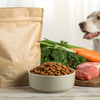
Many dog owners choose a "best of both worlds" approach. This involves using dry kibble as the nutritional base and adding wet food as a "topper." This strategy provides the dental benefits of crunchy kibble with the hydration and flavor of wet food. If you are exploring mixed meals, Do You Mix Wet and Dry Dog Food? Understanding the Benefits and Best Practices is a helpful guide.
When mixing the two, the math becomes even more important. A common mistake is adding a scoop of wet food on top of a full serving of dry food. This leads to "hidden" calories that can cause weight gain over time.
If you add a quarter-can of wet food, you must remove the equivalent amount of dry food. Using the standing-height crank makes this part of the routine incredibly simple. Since the crank mechanism provides perfect portion control with every turn, you can easily adjust your dry food amount down by a specific fraction to make room for the wet topper.
Benefits of Mixing Wet and Dry
- Enhanced Palatability: Great for picky eaters who find plain kibble boring.
- Better Hydration: The extra water in the wet food supports kidney health.
- Cost-Effective: Feeding 100% wet food to a large dog is very expensive. Mixing allows for luxury on a budget.
- Dental Health: The mechanical scraping of kibble helps reduce plaque while the wet food provides variety.
Practical Considerations for the Home
Switching to wet food or a hybrid diet introduces new challenges to your kitchen routine. Unlike dry food, wet food is messy. It has a strong odor and requires refrigeration once opened. It also attracts pests if left in the bowl for too long.
Managing the Mess
Wet food should never sit out for more than 30 to 60 minutes. Bacteria grow quickly in moist environments. If your dog is a "grazer" who likes to snack throughout the day, a 100% wet food diet might not be the right choice for your lifestyle.
Freshness and Storage
Dry food is remarkably shelf-stable. Our BPA-free liner in the Houndsy Kibble Dispenser is designed to keep your dry food fresh and protected from air and light. Wet food, however, needs to be tightly sealed in the fridge and used within three days of opening.
Aesthetic Harmony
Many pet owners find that cans and half-used pouches clutter the countertop. Maintaining a clean, design-forward kitchen means finding a place for everything. We believe that pet care products should complement your home. While wet food stays in the fridge, your dry food can stay in a beautiful, mid-century modern dispenser that looks like a piece of furniture rather than a plastic bin.
When to Choose Wet Over Dry
There are specific life stages and health conditions where the "equivalent" amount of wet food is actually the better choice for your pet.
Senior Dogs
As dogs age, their sense of smell can decline. Wet food has a much stronger aroma than dry kibble, which can entice a senior dog to keep eating. Additionally, older dogs often have dental issues or missing teeth. The soft texture of wet food is much easier for them to manage than hard kibble.
Puppies in Training
Puppies have high energy needs but small stomachs. Sometimes, they cannot physically eat enough dry kibble to get the calories they need for growth. Adding a calorie-dense wet food can help them get that extra boost without over-stretching their tummies.
Dogs with Urinary Issues
If your vet has mentioned crystals or urinary tract health, hydration is your best friend. The moisture in wet food helps flush the system. In these cases, even if the caloric equivalent of wet food is more expensive, the health benefits far outweigh the cost.
Transitioning Between Food Types
You should never swap your dog's food overnight. Their digestive systems are sensitive to changes in protein sources and moisture levels. A sudden switch can lead to upset stomachs and a mess on your rug.
Step 1: The 25% Rule For the first two days, feed 75% of the old food and 25% of the new food (calculated by calories).
Step 2: The Half-Way Point On days three and four, move to a 50/50 split.
Step 3: The Final Stretch On days five and six, feed 25% of the old food and 75% of the new food.
Step 4: Full Transition By day seven, your dog should be fully adjusted to the new ratio.
Myth: Dogs need a "variety" of different foods every day to stay happy. Fact: Most dogs thrive on a consistent routine. While a topper can add interest, frequent total diet changes can cause chronic digestive upset.
Consistency is the Key to Health
The most important part of the "wet vs. dry" debate is not actually which one you choose. It is how consistently you feed it. Inconsistent portions are the leading cause of pet obesity in the United States.
Whether you are feeding a premium canned pate or a high-quality dry kibble, the goal is a repeatable, accurate routine. This is why we focused so heavily on the mechanical experience of feeding. When you use a scoop, you might get a "heaping" cup one day and a "level" cup the next. Those small differences add up.
Our hero product, the Houndsy Kibble Dispenser, was created to remove that human error. By using a standing-height crank, you get the exact same amount of food every single time. There is no bending down, no digging through a dusty bag, and no guessing if the scoop is full. It simplifies the process so you can focus on the joy of the meal, rather than the chore of the measurement.
Feeding for Your Lifestyle
Every household has a different rhythm. A busy professional might prefer the convenience of dry food that can be dispensed in seconds before heading to the office. A retired couple might enjoy the ritual of mixing a gourmet wet topper into their dog's evening meal.
There is no "wrong" way to feed your dog as long as the calories are balanced and the ingredients are high-quality. However, it is worth considering how your feeding choice affects your home environment.
- Dry Food: Best for cleanliness, dental health, and long-term storage.
- Wet Food: Best for hydration, picky eaters, and senior care.
- Mixed Diet: Often the most sustainable choice for long-term health and happiness.
Protecting Your Routine
If you have a household with curious toddlers or very clever dogs, feeding time can sometimes involve "unauthorized" snacks. Wet food cans are usually safe once they are in the fridge, but dry food bags are notoriously easy for a dog to rip open.
This is another area where thoughtful design makes a difference. Our dispenser features an auto-locking mechanism. This ensures that even if your dog figures out where the food is kept, they cannot dispense it themselves. It protects the integrity of your portion control and prevents the "kibble binge" that can lead to emergency vet visits.
The Financial Side of the Conversion
It is no secret that wet food is more expensive per calorie than dry food. When you convert one cup of dry food to one can of wet food, you are often tripling or quadrupling the cost of that meal.
For many owners, the hybrid approach is the most financially sensible. By using a high-quality dry food stored in a 25–30 lb capacity container, you can buy in bulk to save money. You can then spend your "feeding budget" on high-quality wet toppers that provide the flavor and moisture your dog loves without breaking the bank.
We also understand that investing in high-quality pet gear is a commitment. That is why we offer flexible financing options for our products. We want to make a beautiful, functional feeding station accessible to every dog lover who values their home's aesthetic.
Final Thoughts on Portions
At the end of the day, your dog doesn't care about the math. They care about the ritual. They care about the sound of the food hitting the bowl and the consistency of knowing when their next meal is coming.
By understanding that one 13-ounce can is roughly equivalent to one cup of dry food, you have the foundation you need to make healthy choices. Always prioritize calories over volume, transition slowly, and keep your dog's water bowl full. For more practical portioning guidance, How Much Food to Give Your Dog: A Comprehensive Guide is a useful next step.
Houndsy was founded to solve the tiny frustrations that add up over a lifetime of pet ownership. Feeding your dog shouldn't involve a dusty bag in a dark closet or a struggle with a plastic scoop. It should be a seamless, beautiful part of your day. To see the story behind that philosophy, explore our mission and design philosophy.
Bottom line: Focus on the calories listed on your food labels to find the exact conversion for your specific brand, and use a consistent measuring tool to keep your dog's weight on track.
If you are ready to move away from the mess of bags and scoops, we invite you to explore the Houndsy Kibble Dispenser. It is designed to fit your life and your home perfectly.
We offer a 30-day risk-free guarantee because we are confident that once you experience a more refined feeding routine, you will never want to go back to the old way.
FAQ
Is it okay to mix wet and dry dog food in every meal?
Yes, mixing wet and dry food is a very common and healthy practice for most dogs. It provides a variety of textures and increases hydration while maintaining the dental benefits of kibble. Just ensure you are reducing the amount of dry food to compensate for the calories in the wet food to avoid overfeeding.
How many calories are usually in a standard can of dog food?
A standard 13.2-ounce can of wet dog food typically contains between 350 and 450 calories. This is roughly the same amount of energy found in one level cup of most high-quality dry kibbles. Always check the specific "kcal per can" label on your brand, as some "weight management" or "active" formulas can vary significantly.
Does wet dog food cause more dental problems than dry food?
Wet food does not inherently cause dental disease, but it lacks the abrasive "scrubbing" action that dry kibble provides as a dog chews. If you feed an all-wet diet, you may need to be more diligent about brushing your dog's teeth or providing dental chews. Many owners find that a mixed diet offers the best balance for oral health.
How long can I leave wet food in my dog's bowl?
You should generally pick up any uneaten wet food after 30 to 60 minutes. Because of the high moisture content, wet food can quickly become a breeding ground for bacteria or attract flies and other pests. If your dog does not finish their wet food portion quickly, it is best to offer smaller amounts more frequently.