How to Choose the Best Dry Dog Food for Your Pup
- Houndsy
Table of Contents
- Introduction
- Understanding the Basics of Canine Nutrition
- How to Read a Dog Food Label Like a Pro
- Matching Food to Life Stages and Size
- Identifying High-Quality Ingredients vs. Fillers
- The Importance of Freshness and Proper Storage
- Transitioning to a New Food
- Evaluating the Results: Is the Food Working?
- Considering Your Home Environment
- Common Mistakes to Avoid
- Final Thoughts on Choosing the Right Path
- FAQ
Introduction
Standing in the pet food aisle can feel like trying to solve a puzzle where the pieces don't quite fit. You are surrounded by floor-to-ceiling bags promising "ancient grains," "wild-caught proteins," and "farm-fresh vegetables," yet the ingredient lists often read more like a chemistry textbook than a meal. We have all been there—squinting at the fine print, wondering if a higher price tag actually equals a healthier dog, or if we are simply paying for fancy packaging.
At Houndsy, we believe that feeding your dog should be the best part of their day, not a source of stress for yours, which is why we designed our Houndsy Kibble Dispenser. Whether you have a high-energy puppy or a dignified senior, the foundation of their health starts with what goes into their bowl every morning and evening. Choosing the right food is about more than just picking a brand; it is about understanding your dog’s unique biological needs and cutting through the marketing noise to find real quality.
This guide will walk you through everything you need to know to make an informed decision. We will cover how to decode labels, what ingredients to prioritize, and how to tailor nutrition to your dog’s specific life stage. Our goal is to simplify the selection process so you can feel confident that you are providing the best possible fuel for your companion.
Understanding the Basics of Canine Nutrition
Before you can choose the best dry dog food, it helps to understand what a dog actually needs to thrive. Unlike humans, who are true omnivores, dogs are often described as scavenging carnivores. They are incredibly resilient and can derive nutrition from a variety of sources, but their bodies are optimized to process animal proteins and fats.
The Role of Protein
Protein is the building block of your dog’s body. It supports everything from muscle development and tissue repair to immune function and hormone production. When you look at a bag of kibble, the protein should primarily come from high-quality animal sources. While plants contain protein, they often lack the full spectrum of essential amino acids that dogs require.
Essential Fats and Fatty Acids
Fats are the most concentrated source of energy for dogs. Beyond just "fuel," fats are necessary for the absorption of certain vitamins (A, D, E, and K) and play a massive role in maintaining a shiny coat and healthy skin. Look for specific sources like chicken fat or fish oil rather than generic "animal fat." Omega-3 and Omega-6 fatty acids are particularly important for brain health and reducing inflammation.
The Debate Over Carbohydrates
Carbohydrates are not strictly "essential" in the same way proteins are, but they serve an important purpose in dry dog food. They provide a quick source of energy and the fiber necessary for healthy digestion. In kibble production, starches also act as the "glue" that holds the nuggets together. The key is to ensure the carbohydrates come from whole, digestible sources like sweet potatoes, brown rice, or oats, rather than cheap fillers.
Quick Answer: The best dry dog food is one that lists a named animal protein as the first ingredient, meets AAFCO standards for your dog's specific life stage, and avoids generic by-products or artificial preservatives. Consistency in feeding, paired with high-quality storage, ensures these nutrients actually benefit your dog.
How to Read a Dog Food Label Like a Pro
The front of the bag is designed by marketers to catch your eye. The back of the bag is where the truth lives. To choose the best food, you must ignore the pictures of leaping wolves and focus on two specific areas: the Nutritional Adequacy Statement and the Ingredient List.
The AAFCO Statement
The Association of American Feed Control Officials (AAFCO) sets the nutritional standards for pet foods in the United States. Somewhere on the bag, usually in very small type, you should find a sentence stating that the food is "complete and balanced."
This statement will also specify which life stage the food is for:
- Growth and Reproduction: Formulated for puppies and pregnant/nursing dogs.
- Adult Maintenance: Formulated for fully grown dogs with average activity levels.
- All Life Stages: Meets the requirements for both puppies and adults.
The "First Five" Rule
Ingredients are listed by weight before cooking. Because dry kibble is processed at high heat, the moisture in fresh meat evaporates, meaning the actual "meat" content might be lower than it appears once the food is finished. However, the first five ingredients typically make up the vast majority of the food's volume.
Ideally, at least two of these first five ingredients should be a named animal protein (like "deboned chicken" or "lamb meal"). If the first few ingredients are "corn gluten meal" or "wheat flour," the food is likely relying on plant-based fillers to hit its protein targets, which is less ideal for your dog's digestion.
Guaranteed Analysis
The Guaranteed Analysis provides the minimum percentages of crude protein and crude fat, and the maximum percentages of crude fiber and moisture. While these numbers don't tell you the quality of the ingredients, they help you compare different brands.
Key Takeaway: Don't let marketing terms like "premium" or "gourmet" sway you. Focus on the AAFCO statement and ensure the first three ingredients are identifiable, high-quality protein sources.
Matching Food to Life Stages and Size
A Great Dane puppy has vastly different nutritional requirements than an aging Pomeranian. Feeding the wrong formula can lead to growth issues, weight gain, or nutrient deficiencies.
Puppy Nutrition
Puppies need more calories, protein, and fat than adult dogs because they are building bone and muscle at an incredible rate. For large-breed puppies, it is especially critical to find a "Large Breed Puppy" formula. If you are unsure about timing, our guide on when to switch from puppy food to adult can help you make that transition with confidence.
Adult Maintenance
Once your dog reaches skeletal maturity—anywhere from 10 to 24 months depending on the breed—they should transition to an adult formula. Adult food is generally lower in calories than puppy food to prevent obesity. This is also the time when consistency becomes your best friend, and how much food should I feed my adult dog is the question that keeps portion sizes on track.
Senior Support
As dogs age, their metabolism slows down, and they may become less active. Senior dog foods often include supplements like glucosamine and chondroitin for joint health, as well as increased fiber to help with digestion. However, some seniors actually need more protein to maintain muscle mass as they age, so keep a close eye on their body condition.
| Dog Life Stage | Primary Nutritional Focus | What to Look For |
|---|---|---|
| Puppy | Growth & Brain Development | DHA, high protein, balanced calcium/phosphorus |
| Adult | Maintenance & Energy | Moderate protein/fat, balanced vitamins |
| Senior | Joint Health & Weight Control | Glucosamine, lower calories, high fiber |
| Active/Working | Sustained Energy | High fat content, calorie-dense |
Identifying High-Quality Ingredients vs. Fillers
When scanning the list, you want to see words that you recognize. If an ingredient sounds like it belongs in a laboratory, it might be an additive you want to avoid.
Ingredients to Look For
- Named Meat Meals: Ingredients like "chicken meal" are actually highly concentrated protein sources. They have already been "rendered," meaning the water is removed, leaving a nutrient-dense powder that is excellent for kibble.
- Whole Grains or Complex Carbs: Brown rice, barley, and oats provide steady energy. For grain-free options, look for chickpeas, lentils, or sweet potatoes.
- Chelated Minerals: These are minerals attached to organic molecules, making them easier for your dog’s body to absorb.
- Natural Preservatives: Look for "mixed tocopherols" (Vitamin E) or rosemary extract rather than chemical preservatives.
Ingredients to Avoid
- Generic Meat Terms: Avoid "meat meal" or "poultry by-product." If the manufacturer doesn't specify which animal it came from, you can't be sure of the quality or consistency.
- Artificial Colors and Flavors: Dogs don't care what color their food is, and high-quality ingredients should taste good enough that they don't need artificial flavoring.
- BHA, BHT, and Ethoxyquin: These are chemical preservatives that many owners prefer to avoid in favor of natural alternatives.
- Excessive "Splitting": Sometimes a label will list "ground corn," "corn gluten meal," and "corn bran" separately. This is a tactic to prevent "corn" from appearing as the number one ingredient, even though the total amount of corn is the highest.
Bottom line: Quality starts with transparency. If the ingredients are specific and the sources are clear, the manufacturer is likely prioritizing your dog's health over their own profit margins.
The Importance of Freshness and Proper Storage
Even the most expensive, high-quality dry dog food loses its nutritional value if it isn't stored correctly. Once a bag of kibble is opened, the fats are exposed to oxygen, a process called oxidation. This can make the food go rancid, leading to a foul smell, decreased palatability, and even digestive upset.
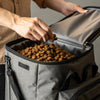
Many owners keep their kibble in the original bag and roll the top down, but this isn't always enough to keep it fresh or keep curious paws out. This is where our BPA-free kibble dispenser helps keep your dog's food fresh and contained. Because it holds 25–30 lbs of food, you can fit most standard bags inside, ensuring that the last bowl of the batch is just as fresh as the first.
Beyond freshness, the way you dispense food matters. Scooping with a dirty plastic cup can introduce bacteria, and eyeballing the "line" in the bowl often leads to overfeeding. We believe that feeding should be a consistent ritual. Our crank-operated dispenser uses a standing-height crank mechanism that delivers a perfect, consistent portion every time. This removes the guesswork and the physical strain of bending over a heavy bag twice a day.
Transitioning to a New Food
Once you have chosen the best dry dog food, you cannot simply swap it out overnight. A sudden change in diet is the fastest way to cause an upset stomach, diarrhea, or a total refusal to eat.
Step 1: The 25% Mix / For the first 2 days, mix 25% of the new food with 75% of the old food. Step 2: The 50/50 Split / On days 3 and 4, move to a half-and-half mixture. Step 3: The 75% Transition / On days 5 and 6, feed 75% new food and 25% old food. Step 4: Full Switch / By day 7, your dog should be ready for 100% of the new formula.
During this week, keep a close eye on your dog's stools and energy levels. If you notice any significant changes or digestive distress, slow the transition down and give their gut more time to adjust. For a deeper walkthrough, how much food to give your dog explains how to keep those portions consistent.
Evaluating the Results: Is the Food Working?
How do you know if you actually chose the "best" food? You have to look at the dog, not the bag. It usually takes about four to six weeks for a dietary change to show outward results.
Signs of a Good Match
- The Coat Test: Is their fur shiny and soft? Brittle hair or flaky skin often suggests a lack of essential fatty acids or poor protein quality.
- Energy Levels: Does your dog seem alert and ready for their walk, or are they sluggish after meals?
- The Poop Factor: This is the most direct way to check digestion. You want small, firm, and consistent stools. If the stools are consistently loose or massive in volume, it may mean your dog isn't absorbing the nutrients and is simply passing a lot of filler.
- Weight Maintenance: You should be able to feel your dog's ribs but not see them prominently. If they are gaining weight on the recommended portion, the food might be too calorie-dense for their activity level.
Myth: "Grain-free" is always better for dogs with allergies. Fact: Most food allergies in dogs are actually triggered by the protein source (like beef or chicken) rather than grains. Unless your vet confirms a grain sensitivity, whole grains can be a healthy part of a balanced diet.
Considering Your Home Environment
We often treat dog feeding as a chore that happens in a mudroom or a hidden corner of the kitchen. But if you care about the design of your home, you have likely noticed that most dog feeding accessories are... well, ugly. Huge plastic bins and flimsy metal bowls don't exactly scream "mid-century modern."
We believe that your dog's gear should complement your home, not clash with it. A well-designed feeding station makes the routine more enjoyable for you, which in turn leads to more consistency for your dog. This mid-century modern feeder was crafted to sit proudly in your kitchen or dining room. When your feeding tools are beautiful and easy to use, the daily ritual of "choosing the best" feels less like a task and more like an extension of the care you provide for your family.
The auto-locking mechanism on our dispenser also adds a layer of safety, preventing clever dogs (or curious toddlers) from helping themselves to an extra meal. This ensures your carefully chosen, high-quality kibble is only dispensed when you decide it is time.
If you want the story behind that philosophy, visit About Houndsy.
Common Mistakes to Avoid
Even with the best intentions, it is easy to fall into a few common traps when selecting dry food.
Falling for "Human-Grade" Hype While "human-grade" sounds great, it is often a marketing term rather than a regulated nutritional standard. A food can be human-grade but still be poorly balanced for a dog's specific needs. Focus on the AAFCO profile first.
Ignoring the Calorie Count Not all "cups" of food are created equal. One brand might have 350 calories per cup, while another has 500. Always check the caloric density before deciding how much to feed. This is another reason why a consistent portioning tool, like the Houndsy dispenser, is so valuable—it helps you maintain that precise calorie count day after day.
Choosing Based on Price Alone The cheapest food is often full of fillers, meaning you have to feed more of it to satisfy your dog's hunger. A more expensive, nutrient-dense food often allows you to feed smaller portions, making the cost-per-meal more comparable than it looks at first glance.
Bottom line: The best food is the one your dog thrives on, you can consistently afford, and you can reliably source.
Final Thoughts on Choosing the Right Path
Choosing the best dry dog food is an act of love. It is a commitment to your dog’s long-term health and a recognition that they rely entirely on you to make the right choice. By focusing on named proteins, understanding life stage requirements, and looking past the marketing fluff, you are already ahead of the curve.
At Houndsy, we are dedicated to simplifying and elevating every aspect of this process. We know that the best food in the world won't do much good if it isn't fed consistently or stored properly. Our mission is to make the feeding experience as beautiful and convenient as it is nutritious.
If you are ready to upgrade your dog's routine, we invite you to try the Houndsy Kibble Dispenser with our 30-day risk-free guarantee. Your dog deserves the best nutrition, and you deserve a home that looks and feels as good as it functions.
FAQ
How do I know if my dog needs grain-free food?
Grain-free is usually only necessary if your dog has a diagnosed allergy to grains like corn, wheat, or soy. Most dogs do very well with whole grains, which provide essential fiber and energy. If you want a deeper explanation of the topic, Should My Dog Food Be Grain Free? breaks down the myth in more detail.
Is "meat meal" a bad ingredient to see on a label?
No, as long as it is a named source like "lamb meal" or "chicken meal." Meat meal is simply meat that has been cooked and dried to remove moisture, making it a very concentrated and high-quality protein source for kibble. You should only avoid generic terms like "meat meal" or "animal meal," as these sources are unknown.
How long does dry dog food stay fresh after the bag is opened?
Most dry dog food stays fresh for about 4 to 6 weeks after opening, provided it is stored in a cool, dry place. Using a sealed container with a liner can help extend this freshness by protecting the fats from oxidation; how long dry dog food lasts in a container explains the details. If the food smells "off" or like old paint, it may be rancid and should be discarded.
Should I choose a food based on my dog's breed?
While some breeds have specific tendencies (like joint issues in Labs or heart concerns in Boxers), life stage and size are usually more important factors. A "Large Breed" formula is essential for big dogs to manage growth and joint health, while "Small Breed" kibble is easier for tiny mouths to chew and digest.