How Much Dry Food for a 40 lb Dog: A Simple Guide
- Houndsy
Table of Contents
- Introduction
- The Baseline: General Estimates for a 40 lb Dog
- Factors That Change the Daily Amount
- Assessing Your Dog's Condition
- The Value of Feeding Consistency
- Practical Tips for Better Feeding
- Beyond the Bowl: Design and Environment
- Transitioning and Adjusting
- Conclusion
- FAQ
Introduction
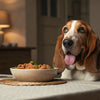
You stand in the kitchen with a plastic scoop in one hand and a heavy bag of kibble in the other. Your 40 lb dog is watching your every move with focused intensity. You look at the feeding chart on the back of the bag, but the range it gives you is surprisingly wide. One column suggests two cups, while another says three. You wonder if you are overfeeding or if those soulful eyes mean your pup is actually still hungry.
At Houndsy, we believe that feeding your dog should be the best part of your day, not a moment of guesswork or physical strain. Our Houndsy Kibble Dispenser helps make that routine easier.
This guide will break down exactly how to determine the right amount of food for your medium-sized dog. For a closer look at the numbers, our daily feeding guide can help you compare your dog’s needs with a starting point. We will look beyond the vague labels to help you find a precise number that fits your dog’s unique lifestyle. Our goal is to help you move away from the "guesstimate" and toward a consistent, healthy routine that fits perfectly into your home.
Quick Answer: A typical 40 lb adult dog usually requires between 2 and 2 2/3 cups of dry food per day. This amount varies based on the calorie density of your specific kibble and your dog’s activity level. Always check the kcal/cup measurement on your food bag for the most accurate calculation.
The Baseline: General Estimates for a 40 lb Dog
Determining the right amount of food starts with understanding your dog's daily caloric needs. A 40 lb dog is often considered the "sweet spot" of the canine world. They are sturdy enough for adventures but small enough to curl up comfortably on the sofa. However, because they sit right in the middle of the size spectrum, their metabolic needs can vary significantly.
Most adult dogs of this weight require approximately 900 to 1,200 calories per day. This is a starting point, not a hard rule. If you are using a standard high-quality dry food, you will find that most brands contain between 350 and 450 calories per cup.
Understanding Caloric Density
Not all kibble is created equal. One cup of a "weight management" formula might only have 300 calories. Meanwhile, a high-performance "active dog" formula could have upwards of 500 calories in that same cup. This is why measuring by volume alone can be misleading.
To find the most accurate amount, look for the "kcal/cup" or "kcal/kg" listing on your dog food packaging. This is usually located near the ingredient list or the guaranteed analysis. Once you have this number, you can divide your dog’s daily calorie needs by the calories per cup to find your daily portion.
The Standard Measuring Cup vs. The "Scoop"
Precision is the enemy of weight gain. Many owners use a random plastic cup or an old coffee mug to scoop food. These "scoops" are rarely 8 ounces. Even a small overage of a quarter-cup per day can lead to significant weight gain over a year for a 40 lb dog.
Using a standardized measuring cup is essential. Better yet, using a tool designed for accuracy can remove the human error from the equation. We designed the Houndsy Kibble Dispenser with a focus on this exact precision. With every turn of the standing-height crank, you get a consistent, perfect portion. This eliminates the need to bend over a heavy bag and ensures your dog receives the same amount of energy every single morning and evening.
| Activity Level | Estimated Daily Calories | Estimated Cups (at 400 kcal/cup) |
|---|---|---|
| Inactive / Senior | 800 - 900 kcal | 2 - 2.25 cups |
| Typical Adult | 1,000 - 1,100 kcal | 2.5 - 2.75 cups |
| Highly Active / Working | 1,200 - 1,400 kcal | 3 - 3.5 cups |
Factors That Change the Daily Amount
Every dog has a unique metabolic fingerprint. Just like humans, some dogs can eat quite a bit and stay lean, while others seem to gain weight just by looking at a treat. When you are calculating food for a 40 lb dog, you must account for their specific lifestyle.
The Impact of Activity Levels
The difference between a "weekend warrior" and a "daily hiker" is significant. If your 40 lb dog spends most of the day napping while you work from home, their caloric needs will be at the lower end of the spectrum. An extra half-cup of food for a sedentary dog is essentially pure surplus that will be stored as fat.
Conversely, if you have an active breed like a Border Collie or a spirited mutt that plays fetch for an hour every day, they will burn through those calories quickly. These dogs may require more than the "standard" recommendation to maintain their muscle mass and energy.
Life Stages: Puppy to Senior
Age plays a massive role in how much fuel a dog requires. If your 40 lb dog is still a puppy (reaching their full weight but still growing), they may need significantly more food than an adult. Puppies are building bone, muscle, and brain tissue, which is an energy-intensive process.
As dogs enter their senior years, their metabolism naturally slows down. They may also become less active due to joint stiffness. For a senior dog, you might need to reduce their portion size by 10% to 20% to prevent them from becoming overweight, which can put unnecessary strain on their aging joints.
Spaying and Neutering
Altering a dog changes their hormonal balance and can slow their metabolism. Studies generally show that spayed or neutered dogs require fewer calories than "intact" dogs. Many owners notice their dog gaining weight shortly after their procedure. If your dog has been fixed, keep a closer eye on their waistline and be prepared to trim their daily portions slightly.
Key Takeaway: Calorie needs are dynamic. Use the bag’s recommendation as a starting point, but adjust based on whether your dog is a couch potato or a marathon runner.
Assessing Your Dog's Condition
The scale is only one part of the story. While "40 lbs" is a helpful number, it doesn't tell us if that weight is composed of healthy muscle or excess fat. To truly know if you are feeding the right amount, you need to look at your dog’s body condition.
The Rib Test
You should be able to feel your dog's ribs without pressing hard. This is the gold standard for assessing a dog's weight at home. Stand over your dog and look down at them. You should see a visible "waist" behind the ribs. From the side, their abdomen should have a slight "tuck" upward toward the hind legs.
If you can see the ribs clearly from a distance, your dog may be underweight, and you should increase their food slightly. If you cannot feel the ribs at all even with firm pressure, your dog is likely carrying extra weight, and it is time to scale back.
Monitoring Weight Shifts
Consistency is key to noticing changes before they become problems. We recommend checking your dog's body condition once a week. This isn't about obsession; it's about awareness. Small adjustments are much easier to manage than a major diet.
If you notice your dog is looking a bit "round," try reducing their daily food by just 10%. For a dog eating 2.5 cups, this means removing about a quarter-cup total from their daily intake. Stick with this new amount for two weeks and see if their condition improves.
The Value of Feeding Consistency
Dogs thrive on a predictable schedule. Inconsistent feeding doesn't just affect their weight; it can affect their behavior and digestion. When a dog knows exactly when and how much they will be fed, they are often calmer and less prone to "begging" behaviors throughout the day.
Why Precision Matters
Feeding by "eye" is notoriously inaccurate. On a busy Monday morning, a "scoop" might be a little light. On a relaxed Saturday, it might be a little heavy. These fluctuations can lead to digestive upset or a confused metabolism.
Using a system that guarantees the same amount every time makes it much easier to diagnose health issues. If your dog suddenly gains weight despite you knowing they are getting exactly 2.5 cups a day, you know the issue might be related to their health or stolen snacks, rather than a heavy hand during meal prep.
Our kibble dispenser was designed to bring this exact level of consistency to your home. By removing the guesswork of the traditional scoop-and-bowl method, you provide your dog with a stable nutritional foundation. Plus, the auto-locking mechanism ensures that even the most clever 40 lb dog can't help themselves to an extra "mid-day snack" when you aren't looking.
Managing the Routine
Divide the total daily amount into two meals. Most veterinarians recommend feeding an adult dog twice a day. This keeps their blood sugar stable and prevents them from getting overly hungry and "wolfing" down their food, which can lead to bloating or gas.
For a 40 lb dog requiring 2.5 cups of food:
- Morning: 1.25 cups
- Evening: 1.25 cups
This split also makes it easier to track if your dog is eating normally. If they skip a morning meal, you’ll notice immediately, which can be an early warning sign of a health issue.
Bottom line: A consistent amount of food delivered at the same times each day creates a healthier, more relaxed dog. Precision in portioning is the most effective tool you have for weight management.
Practical Tips for Better Feeding
The way you store and serve food matters as much as the quantity. If the food is stale, your dog might not want to eat it, leading you to think they are sick. If the food is stored in a way that allows it to go rancid, it can lose its nutritional value.
For more ideas on serving meals cleanly and consistently, our dry dog food guide expands on the feeding experience from bowl to routine.
Storage for Freshness
Dry food contains fats that can spoil when exposed to air and light. Many owners dump their dog's food into a plastic bin, but this can lead to issues. Plastic can scratch, and those scratches can harbor bacteria. Additionally, some plastics can leach chemicals into the food.
We recommend using a storage solution with a food-safe, BPA-free liner. The Houndsy dispenser features a liner that keeps up to 30 lbs of kibble fresh and protected from the elements. This capacity is perfect for a 40 lb dog, as it usually holds about a month's worth of food, ensuring the last bowl is just as fresh and nutritious as the first.
Dealing with Picky Eaters
If your dog is leaving food in the bowl, don't immediately reach for the treats. Sometimes, a dog is simply self-regulating. If they had a particularly lazy day, they might not need those extra calories. However, if they are consistently leaving food, you might be overestimating their needs.
Try the following:
- Establish a "window": Put the food down for 20 minutes. If it isn't eaten, pick it up until the next mealtime.
- Check the freshness: Smell the kibble. If it smells "off" or metallic, it might be rancid.
- Limit the toppers: If you add wet food or broth, remember to subtract those calories from the dry food total.
Beyond the Bowl: Design and Environment
Feeding your dog shouldn't be an eyesore. Most pet owners hide their dog's food in a pantry or a utility closet because typical plastic bins and bags are unattractive. This creates a "chore" mentality around feeding—you have to walk to the closet, bend down, scoop, and carry the bowl back.
We believe that your dog's feeding station can actually enhance your home's decor. Our mid-century modern design allows you to keep this standing-height feeder right in your kitchen or dining area. This makes the feeding ritual more integrated into your life. When the feeder is at a comfortable standing height and looks beautiful, the daily routine feels less like a task and more like a moment of connection with your dog.
A well-designed environment also benefits the dog. A quiet, dedicated space for feeding helps them feel secure. When the food is stored in a beautiful, auto-locking cabinet rather than a crinkly bag on the floor, it creates a cleaner, calmer kitchen for everyone.
Key Takeaway: Elevating the feeding experience with better design and better tools leads to a more consistent routine, which is the secret to a healthy weight.
Transitioning and Adjusting
Weight management is a journey, not a destination. As your dog moves through different seasons and life stages, you will likely need to adjust their portions.
For those moments when your dog’s needs change, our feeding guide can help you update the routine without starting from scratch.
How to Change Food Amounts
Step 1: Identify the need. / Look for changes in body condition or energy levels over a two-week period. Step 2: Calculate the adjustment. / Usually, a 10% increase or decrease is enough to see a change without shocking the dog's digestive system. Step 3: Update the routine. / Adjust your measuring tool or dispenser settings to the new amount. Step 4: Monitor for results. / Wait at least 14 days before making another adjustment, as it takes time for a dog's body to respond to caloric changes.
If you are switching to a new brand of food, do not simply use the same cup measurement. Different brands have different calorie counts. Always re-calculate based on the new bag's kcal/cup information.
Myth: "My dog acts hungry, so I should feed them more." Fact: Many dogs are biologically programmed to seek food whenever it is available. Begging is often a learned behavior or a request for attention rather than a sign of actual hunger. Trust the ribs and the scale, not the "puppy dog eyes."
Conclusion
Finding the right amount of dry food for your 40 lb dog is one of the most impactful things you can do for their long-term health. While a baseline of 2 to 2 2/3 cups is a helpful starting point, the true answer lies in their activity level, the specific calories in their kibble, and their unique metabolism. By focusing on precision and consistency, you can keep your dog at their ideal weight and avoid the health complications that come with overfeeding.
Our mission at Houndsy is to simplify this process while making it a beautiful part of your home. To learn more about our story, we want to replace the bending, the scooping, and the guesswork with a refined, consistent experience. Feeding your dog shouldn't be a messy chore hidden in a corner—it should be a seamless, elegant ritual that reflects how much you care for your companion.
- Start with a caloric baseline and adjust for activity.
- Use standard measurements or a precise dispenser.
- Monitor body condition weekly using the "rib test."
- Maintain a strict schedule for a calmer, healthier dog.
If you are ready to elevate your daily feeding routine and ensure your dog gets the perfect portion every time, we invite you to explore the perfect-portion dispenser. We stand by our design with a 30-day risk-free guarantee, so you can see the difference consistency makes in your own home.
FAQ
How many cups of food should a 40 lb dog eat a day?
A typical 40 lb dog usually needs between 2 and 2 2/3 cups of dry food daily, split into two meals. However, this depends entirely on the calorie content of your specific food brand. Always check the kcal/cup on the bag to ensure you aren't overfeeding or underfeeding based on that particular formula.
Can I just follow the chart on the dog food bag?
The charts on the bag are general guidelines and often provide a wide range that may not account for your dog's activity level. Many manufacturers' guidelines are also based on "intact" active dogs, meaning they may suggest more food than a typical spayed or neutered house pet needs. Use the chart as a starting point, but adjust based on your dog's body condition.
Is 2 cups of food enough for a 40 lb dog?
For a senior dog or a very sedentary adult dog, 2 cups may be perfectly adequate, especially if the food is high in calories (around 450 kcal/cup). If your dog is active or the food is lower in calories, 2 cups might not be enough to maintain their weight. Monitor their ribs and energy levels to decide if an increase is necessary.
How do I know if I'm overfeeding my dog?
The easiest way to tell is the "rib test"—you should be able to feel your dog's ribs easily under a thin layer of skin, but they shouldn't be poking out. If you have to press through a layer of fat to find the ribs, or if your dog has lost their visible waistline when viewed from above, you are likely overfeeding. Reducing their daily portion by 10% is usually the best first step.