What Dog Food Is Best for Rottweiler Puppies
- Houndsy
Table of Contents
- Introduction
- Why Large-Breed Specific Formulas Matter
- Top Recommended Food Characteristics for Rottweiler Puppies
- Key Nutrients Every Rottweiler Needs
- Feeding Schedules and Portion Control
- The Role of Kibble Storage in Puppy Health
- Transitioning to Adult Food
- Common Nutritional Myths
- Enhancing the Feeding Experience
- Conclusion
- FAQ
Introduction
You finally bring that roly-poly, black-and-tan bundle of energy home, and suddenly, the weight of responsibility hits. You want them to grow into the powerful, confident, and healthy guardian they are meant to be, but the pet food aisle is an overwhelming wall of colorful bags and conflicting claims. Should you focus on high protein, or is that too much for their developing bones? Is grain-free a necessity, or just a trend?
Choosing the right nutrition for a Rottweiler puppy is a higher-stakes game than it is for a smaller breed. Because these dogs grow rapidly and reach substantial weights, any nutritional imbalance during their first year can contribute to lifelong mobility issues. At Houndsy, we believe feeding your dog should be a moment of connection and ease, not a source of daily stress or a messy chore involving heavy bags and inconsistent scoops.
In this guide, we will break down what to look for in a puppy formula, how to manage growth, and how to establish a consistent feeding routine. We will also explore storage, portions, and the practical tools that can make mealtimes simpler. The right dog food for a Rottweiler puppy must prioritize controlled growth through precise mineral levels and high-quality protein sources.
Why Large-Breed Specific Formulas Matter
It is a common mistake to assume that all puppy food is created equal. While standard puppy food is designed to provide energy for growth, it may be too calorie-dense or mineral-heavy for a large breed like the Rottweiler. If a Rottweiler puppy grows too quickly, their bones may become weak or improperly formed because their skeletal system cannot keep up with their increasing body mass.
The Calcium-Phosphorus Balance
The most critical factor in a Rottweiler puppy’s diet is the balance of calcium and phosphorus. For many large-breed formulas, a ratio near 1.2:1 is commonly used as a reference point. If a food contains too much calcium, it can interfere with normal bone development and contribute to orthopedic problems.
Large-breed puppy formulas are specifically engineered to keep these minerals in an appropriate range. They allow the puppy to grow at a slow, steady pace rather than a fast one. This controlled development helps their joints and bones adapt as their body becomes heavier.
For more background on choosing a formula, this guide to the nutritional needs of Rottweiler puppies offers a useful starting point.
Caloric Density and Weight Management
Rottweilers are famously food-motivated. They may act hungry even shortly after a full meal. However, keeping a Rottweiler puppy lean is one of the kindest things you can do for their developing body. Extra calories can become excess fat, which places additional pressure on soft growth plates and developing joints.
Key Takeaway: Never feed a Rottweiler puppy an “all life stages” food unless it specifically states that it is balanced for the growth of large-size dogs. The goal is steady growth, not maximum growth speed.
Top Recommended Food Characteristics for Rottweiler Puppies
When looking for the best food, the label should include an AAFCO statement confirming that the food is complete and balanced for growth, including the growth of large-size dogs. The specific recipe should also match your puppy’s age, body condition, and veterinary guidance.
Large-Breed Puppy Formula
A large-breed puppy formula should provide controlled calories and carefully balanced minerals. Look for named animal proteins near the top of the ingredient list, along with appropriate fat, fiber, and omega fatty acid levels.
The best choice is not always the most expensive bag. It is the formula that supports gradual growth, agrees with your puppy’s digestion, and helps them maintain a lean body condition.
Protein and Healthy Fats
Growing Rottweilers need protein to support muscle development, but more protein is not automatically better. Focus on a complete formula with high-quality animal protein and a nutritional profile designed for large-breed puppies.
Healthy fats provide energy and support skin, coat, brain, and vision development. Ingredients such as fish oil may provide DHA, an omega-3 fatty acid associated with early cognitive and visual development.
Digestible Carbohydrates
Carbohydrates can provide energy and fiber. Whole grains, vegetables, and other digestible carbohydrate sources may all fit within a balanced puppy diet. Grain-free food is not automatically superior, and it should not be chosen unless it suits your puppy’s specific needs and your veterinarian’s advice.
Key Nutrients Every Rottweiler Needs
While the brand name matters less than the nutritional profile, the ingredient list still deserves careful attention. A growing Rottweiler needs a balanced toolbox of nutrients to build a resilient body.
- High-quality protein: Look for named meat or fish sources that provide amino acids for muscle development.
- Omega-3 fatty acids: DHA and EPA may support brain, vision, skin, and coat development.
- Joint-support ingredients: Some formulas include glucosamine or chondroitin, though these should not replace veterinary guidance.
- Antioxidants: Ingredients such as fruits and vegetables can contribute nutrients that support normal immune function.
- Balanced minerals: Calcium and phosphorus should be appropriate for large-breed growth.
Avoid adding calcium or mineral supplements unless your veterinarian specifically recommends them. A complete large-breed puppy food should already provide the balance your puppy needs.
Feeding Schedules and Portion Control
Quick Answer: Many Rottweiler puppies eat three meals a day until around six months, then transition to two meals daily. The correct amount depends on the food’s calorie density, your puppy’s age and weight, and their body condition. Aim for a visible waist and ribs that are easy to feel beneath a thin layer of fat.
Establishing a Consistent Routine
Consistency is the secret to a manageable feeding routine. Puppies often benefit from predictable mealtimes because a schedule can make digestion, training, and house-training easier to organize.
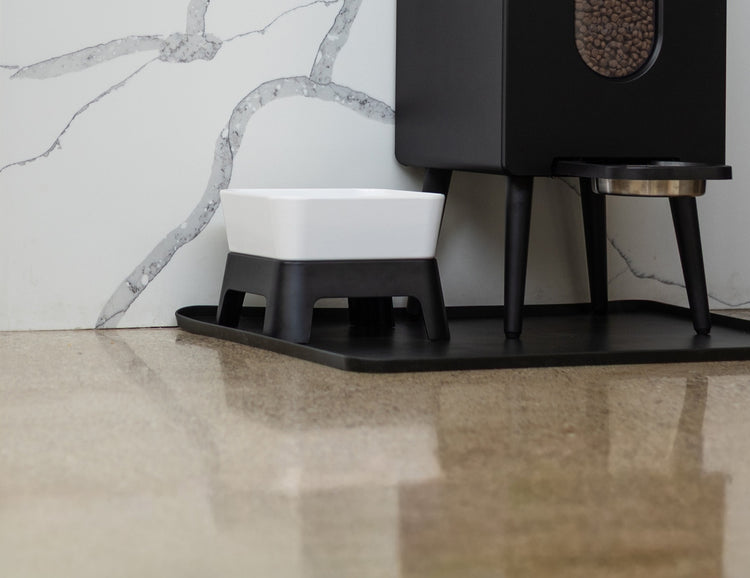
However, many owners struggle with the physical side of feeding. Bending over a low bowl or wrestling with a heavy bag every morning can become frustrating. A standing-height kibble dispenser can make serving a measured portion easier without requiring a scoop each time.
By keeping the feeding station in an accessible part of the home, you are more likely to maintain the routine. Removable serving bowls can also help match the amount your veterinarian recommends, whether that is a half cup or several cups per meal.
For additional guidance, read these practical tips for how much kibble to feed your dog.
Monitoring Body Condition
You should be able to feel your Rottweiler’s ribs without pressing hard, but you should not see them sharply protruding. If your puppy looks like a cylinder, they may be carrying too much weight.
- Check the ribs: Run your hands along their side. The ribs should be easy to feel beneath a thin covering.
- Check the waist: Look down from above. There should be a visible narrowing behind the rib cage.
- Adjust carefully: Puppies grow quickly, and their needs change. Review portions with your veterinarian rather than making large changes based on appetite alone.
A consistent tool such as interchangeable portion bowls can make small adjustments easier to repeat from meal to meal.
The Role of Kibble Storage in Puppy Health
Many owners spend time choosing a nutritious food but store it in a way that allows it to lose freshness. Once a bag of kibble is opened, its fats are exposed to air. Poor storage can affect taste and may contribute to digestive upset.
Standard plastic bins can also be bulky, difficult to seal, and unpleasant to leave in the kitchen. A dedicated storage solution helps keep the feeding area cleaner and makes the daily routine easier to manage.
Our dispenser uses a BPA-free liner and can hold up to 30 pounds of dry kibble. The kibble storage and dispensing system keeps food in one organized place while giving you a consistent way to serve it.
For more practical advice, read this guide to storing dry dog food for freshness.
The auto-locking mechanism also helps prevent unintended dispensing by curious puppies or toddlers. It does not replace supervision, but it can reduce the chance of an accidental extra serving.
Bottom line: High-quality food only stays high-quality when it is stored in a clean, suitable environment away from excess air, heat, moisture, and pests.
Transitioning to Adult Food
One of the biggest mistakes Rottweiler owners make is switching to adult food too early. A Rottweiler may look nearly full-grown during the first year, but skeletal development can continue well into the second year.
Many Rottweilers transition to adult food between 18 and 24 months, though the right timing depends on individual growth and veterinary guidance. Staying on puppy food too long may provide unnecessary calories, while switching too soon may not meet the needs of continued development.
Step-by-Step Transitioning
When the time comes to switch, do not change foods overnight. A gradual transition can reduce the chance of digestive upset.
- Step 1: The 75/25 mix. Serve 75% of the old food and 25% of the new food for two to three days.
- Step 2: The 50/50 mix. Serve equal parts of both foods for another few days.
- Step 3: The 25/75 mix. Use mostly the new food with a smaller amount of the old food for the final few days.
- Step 4: Full transition. If stools remain firm and energy stays normal, move to the new food completely.
If your puppy develops persistent diarrhea, vomiting, appetite loss, or unusual lethargy, contact your veterinarian.
Common Nutritional Myths
Myth: “A Rottweiler needs to be bulky as a puppy to become a strong adult.”
Fact: A bulky puppy may simply be overweight. Extra fat is not the same as muscle, and excess weight can increase strain on developing joints.
Myth: “Grain-free food is always better for Rottweilers.”
Fact: Grain-free food is not automatically healthier. Unless your puppy has a diagnosed dietary need, a balanced grain-inclusive formula may be an appropriate option. Discuss major diet changes with your veterinarian.
Myth: “A puppy should eat as much as they want.”
Fact: Free-feeding can make it difficult to track intake, especially with a food-motivated breed. Scheduled meals and measured portions are usually easier to monitor.
Enhancing the Feeding Experience
Feeding your Rottweiler is not just about calories. It is also about the routine you build together. This is a people-focused breed that often wants to be involved in what you are doing.
When your feeding station is an eyesore or hidden behind heavy bags, feeding can feel like a chore. Bringing the station into the heart of the home can make the process easier to repeat. A mid-century modern feeder can store food, serve portions, and fit more naturally into your living space.
Action Steps for New Rottweiler Owners
- Buy food specifically labeled for large-breed growth.
- Avoid adding calcium supplements unless directed by your veterinarian.
- Use an appropriate storage solution to protect food from air and moisture.
- Keep a growth chart and adjust portions to maintain a lean body condition.
- Schedule regular veterinary visits to discuss weight, joints, and development.
- Keep meals measured and predictable rather than relying on appetite alone.
For more ideas on making mealtimes cleaner and more repeatable, explore these ways to serve dry dog food.
Conclusion
The best dog food for a Rottweiler puppy respects their unique biology. It should provide controlled minerals for developing bones, high-quality protein for muscle growth, and an appropriate calorie level to help prevent excess weight.
At Houndsy, we know that the “what” of feeding is only half the battle. The “how” matters too. A consistent routine can make daily care easier, from storing the bag to serving the right amount at the right time.
- Prioritize steady growth through a large-breed puppy formula.
- Maintain a predictable feeding schedule.
- Monitor body condition instead of feeding based on begging.
- Store kibble in a clean, suitable environment.
- Ask your veterinarian before changing food or adding supplements.
Key Takeaway: Your Rottweiler’s health starts at the bowl. Combining appropriate nutrition with a consistent, measured routine gives your puppy a strong foundation for adulthood.
If you are ready to simplify the daily process, explore the Kibble Dispenser. It offers measured serving options, organized storage, and a 30-day money-back guarantee so you can decide whether it fits your routine.
FAQ
How long should I feed my Rottweiler puppy food?
Many Rottweilers remain on a large-breed puppy formula until they are between 18 and 24 months old. The right timing depends on your dog’s growth, body condition, food, and veterinary guidance.
Can I feed my Rottweiler puppy a raw diet?
Raw diets can be difficult to balance for a growing large-breed puppy, especially when calcium and phosphorus must remain appropriate. If you are considering raw feeding, discuss the plan with your veterinarian or a qualified veterinary nutrition professional.
Why is my Rottweiler puppy always acting hungry?
Rottweilers can be highly food-motivated and may beg even after eating an appropriate meal. Follow the feeding guidance on the food package and your veterinarian’s recommendations rather than increasing portions based only on begging. A measured serving system such as a portion-control dispenser can make the routine easier to repeat.
Should I add supplements to my Rottweiler’s puppy food?
Generally, do not add calcium or mineral supplements to a complete large-breed puppy food unless your veterinarian directs you to do so. These formulas are already designed to provide balanced nutrition, and unnecessary supplementation can disrupt that balance.