Will Dry Dog Food Hurt a Cat? What Owners Need to Know
- Houndsy
Table of Contents
- Introduction
- The Immediate Question: Is It Toxic?
- Why Cats and Dogs Can’t Share a Menu
- The Critical Nutrients Cats Lose on Dog Food
- Why Does My Cat Want the Dog’s Food?
- Practical Management: How to Stop the Stealing
- What to Do If You Run Out of Cat Food
- The Role of Consistency in Pet Health
- Recognizing the Signs of Long-Term Malnutrition
- Conclusion
- FAQ
Introduction
It happens in the blink of an eye. You walk into the kitchen to find your cat perched over the dog’s bowl, crunching away on a piece of large-breed kibble with surprising enthusiasm. Or perhaps you’ve reached into the pantry only to realize you’re at the bottom of the cat food bag, and the local shop is already closed for the night. In these moments, the question is inevitable: will dry dog food hurt a cat?
At Houndsy, we understand that the modern home is often a multi-pet ecosystem where boundaries can get a little blurry. We believe that feeding your pets should be a moment of connection and ease, not a source of stress or confusion. If a cleaner routine would help, the Houndsy Kibble Dispenser can make mealtime feel a lot more intentional. This post covers everything you need to know about the safety of dog food for felines, the critical nutritional differences between the species, and how to manage a household where everyone wants a taste of someone else’s dinner.
The short answer is that a few stolen bites won't cause immediate harm, but dog food is not a sustainable or safe diet for a cat. We will explore the biological "why" behind this and provide practical steps to keep your pets healthy and your kitchen routine beautiful.
The Immediate Question: Is It Toxic?
Quick Answer: Dry dog food is not toxic to cats. If your cat eats a small amount or even a single meal of dog food in an emergency, they will likely be perfectly fine. However, dog food lacks essential nutrients like taurine and high protein levels that cats need to survive, making it dangerous as a long-term diet.
When a cat sneaks a snack from the dog's bowl, most owners worry about an immediate allergic reaction or poisoning. Fortunately, the ingredients found in standard, high-quality dog kibble are generally safe for feline consumption in the short term. You won't find anything inherently "poisonous" to cats in a standard bag of dog food, provided it doesn't contain specific additives like certain onions or garlic powders in high concentrations.
However, "not toxic" is not the same as "healthy." While your cat might not experience an immediate stomach upset, their body is processing that food very differently than a dog's would. If the "theft" becomes a habit, or if you attempt to switch your cat to a dog-food-only diet to save money or space, the consequences can become life-threatening.
Short-Term Side Effects
While not common from just a few kibbles, some cats have more sensitive digestive systems than others. If your cat overindulges in the dog’s dinner, you might notice:
- Mild diarrhea or soft stools
- Occasional vomiting
- A slight decrease in appetite for their own food
- Lethargy due to an imbalance in energy sources
If these symptoms persist for more than 24 hours, it is always best to consult your veterinarian. For most cats, however, the primary "hurt" isn't what is in the dog food—it’s what is missing from it.
Why Cats and Dogs Can’t Share a Menu
To understand why dog food is insufficient for cats, we have to look at their biological blueprints. Dogs are classified as omnivores. Much like humans, they have evolved to derive nutrients from a wide variety of sources, including meats, grains, and vegetables. Their bodies are relatively flexible and can synthesize certain vitamins and amino acids from plant-based precursors.
Cats, on the other hand, are obligate carnivores. This is a biological term meaning they must eat meat to survive. Their entire physiological system—from their teeth to their short digestive tracts—is designed to process animal protein. They lack the metabolic pathways to create certain essential nutrients from plants or even from other animal fats.
Key Takeaway: Because cats are obligate carnivores, they require specific animal-derived nutrients that are simply not present in the omnivorous formulations of dog food.
The Protein Gap
Protein is the building block of muscle, skin, and fur, but for a cat, it is also a primary energy source. Most standard dog foods contain between 18% and 26% protein. While this is plenty for a dog, it is often the bare minimum for a cat. Felines generally require a diet consisting of 30% to 45% protein to maintain their organ function and muscle mass.
When a cat eats dog food consistently, they are essentially living in a state of "protein starvation." They may look full, but their muscles and organs aren't receiving the fuel they need to regenerate. Over time, this leads to muscle wasting and a weakened immune system.
The Critical Nutrients Cats Lose on Dog Food
The most dangerous aspect of feeding dog food to a cat involves the "invisible" ingredients—specifically amino acids and vitamins that are added to cat food but omitted from dog food.
1. Taurine: The Most Vital Component
Taurine is an amino acid found almost exclusively in animal tissues. Dogs can actually create their own taurine from other amino acids. Because of this, many dog food manufacturers do not add extra taurine to their recipes.
Cats cannot make their own taurine. If they do not ingest it through their diet, their bodies begin to break down. A taurine deficiency in cats leads to two devastating conditions:
- Dilated Cardiomyopathy (DCM): The walls of the heart become thin and weak, eventually leading to heart failure.
- Retinal Degeneration: The back of the eye slowly deteriorates, leading to permanent blindness.
2. Vitamin A
Both species need Vitamin A for healthy skin and vision. However, dogs can eat a carrot and turn the beta-carotene into Vitamin A. Cats lack the enzyme to do this. They need "preformed" Vitamin A, which is usually found in organ meats or specific supplements. Dog food often relies on plant-based precursors that leave cats deficient.
3. Arachidonic Acid
This is an essential fatty acid that cats need for their inflammatory response and skin health. Dogs can produce it themselves; cats cannot. Without it, a cat’s skin becomes flaky, their coat becomes dull, and their body loses its ability to heal properly from minor injuries.
4. Niacin and Thiamine
Cats have a much higher requirement for B vitamins like niacin and thiamine than dogs do. Thiamine deficiency, in particular, can cause neurological issues in cats, including head tilting, circling, and seizures.
| Nutrient | Why Cats Need It | Can Dogs Make It? | Present in Dog Food? |
|---|---|---|---|
| Taurine | Heart and eye health | Yes | Rarely supplemented |
| Vitamin A | Vision and skin | No (must be preformed) | Often plant-based |
| Arachidonic Acid | Healing and coat | No | Seldom added |
| High Protein | Energy and muscle | Partial (lower needs) | Moderate levels only |
Bottom line: While a few bites of dog food won't hurt, the lack of taurine and Vitamin A in dog food makes it a dangerous long-term choice that can lead to heart failure and blindness in cats.
Why Does My Cat Want the Dog’s Food?
If dog food is so nutritionally poor for cats, why do they seem to love it so much? There are a few reasons for this behavior that have more to do with psychology than nutrition.
The "Forbidden Fruit" Effect Cats are naturally curious. If they see the dog eating something with gusto, they assume it must be valuable. This is especially true if you make a fuss when they go near the dog's bowl. To a cat, the dog's dish is a resource worth investigating simply because it belongs to someone else.
The Power of Aroma Dog food is often sprayed with fats and flavor enhancers (called "digests") to make it smell more appealing to canines. These savory, fatty scents can be very enticing to a cat, even if the actual flavor of the kibble is bland compared to feline-specific food.
Texture Preferences Cat kibble is generally small and uniform. Some cats actually prefer the larger, crunchier texture of dog kibble. Short-nosed (brachycephalic) cats, such as Persians, may also find it easier to pick up larger dog kibble pieces than the tiny, flat discs found in many cat food bags. If you want the canine side of the same household habit, see why dogs eat cat food for the other half of the story.
Practical Management: How to Stop the Stealing
Managing a multi-pet household requires a bit of strategy. At Houndsy, we believe that a well-designed routine is the secret to a happy home. If your cat is constantly raiding the dog's bowl, it creates an inconsistent feeding schedule for both pets.
Step 1: Implement Scheduled Mealtimes "Free-feeding," or leaving a bowl of food out all day, is the easiest way to let cross-species snacking happen. Instead, feed your pets at the same time every morning and evening. For a deeper look at a scheduled feeding routine, this approach keeps food from lingering.
Step 2: Use Elevation to Your Advantage Cats are natural climbers; dogs (mostly) are not. Feed your cat on a high counter, a sturdy shelf, or a dedicated cat tree. By moving the cat's food up, you keep the dog away from it. To keep the cat away from the dog's food, consider using a separate room for the dog or a gated area that the cat can't easily access. If you need more ideas for how to stop dogs eating cat food, separate zones are a great place to start.
Step 3: Elevate the Experience with Better Tools Consistency is key to pet health. Using the standing-height crank mechanism can help streamline your dog's feeding routine while keeping their food fresh and secure. Our standing-height crank mechanism means you can dispense the perfect portion of dog food directly into the bowl without leaving bags open or scoops lying around, which often attract curious cats.
Step 4: Pick Up Leftovers Once the dog is finished eating, pick up the bowl. If there are stray kibbles left behind, they are an open invitation for the cat. By removing the bowl entirely once mealtime is over, you remove the temptation.
Bottom line: Transitioning from free-feeding to scheduled mealtimes is the most effective way to prevent cats from eating dog food and ensure both pets get the nutrients they need.
What to Do If You Run Out of Cat Food
If you find yourself in a "midnight emergency" where the cat food bag is empty, you might be tempted to reach for the dog food. While one meal won't kill your cat, there are often better alternatives sitting in your refrigerator.
If you are out of cat food, consider these safe "human food" toppers instead of a bowl full of dog kibble:
- Plain Boiled Chicken: No skin, no bones, and no seasoning.
- Cooked White Fish: Ensure all bones are removed.
- Scrambled Eggs: Cooked without butter, oil, or salt.
- Canned Tuna (in Water): Only as a very rare treat, as it is high in mercury and lacks vitamins, but it works in a pinch.
These options are much higher in the protein your cat craves and are closer to their natural biological needs than a bowl of grain-heavy dog food. Once the shops open, prioritize getting a high-quality cat food formulated for cats to get them back on track.
The Role of Consistency in Pet Health
We often underestimate how much a steady routine impacts our pets' physical and mental well-being. When a cat eats dog food, even occasionally, it disrupts their digestion and can lead to finicky eating habits. They may start holding out for the "tasty" dog food and refusing their own nutritionally superior meals. For a closer look at how to feed kibble to dogs, the key idea is that routine matters.
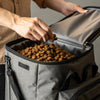
Consistency is at the heart of our mission. We designed the Houndsy Kibble Dispenser to make it easier for owners to maintain a precise feeding schedule for their dogs. 25–30 lb storage capacity and a BPA-free liner mean the dog's food stays fresh and tucked away. It’s not just about the dog, though; by keeping the dog's food stored in a beautiful, furniture-grade cabinet with an auto-locking mechanism, you prevent curious cats (and toddlers) from helping themselves to unauthorized snacks.
When you treat the feeding ritual as a refined part of your home decor, you’re more likely to stick to the routine. A product you don’t mind having on display is a product you will actually use correctly every single day.
Recognizing the Signs of Long-Term Malnutrition
If you have recently adopted a cat that was previously fed a dog-food diet, or if you suspect your cat has been stealing substantial amounts of dog food for a long time, you need to know what to look for. Malnutrition doesn't always look like "skinny." In many cases, a cat eating dog food might actually look overweight because they are consuming too many carbohydrates while their muscles are wasting away beneath the surface.
Watch for these warning signs:
- Poor Coat Quality: The fur may feel greasy, coarse, or look dull. You might see more dander than usual.
- Lethargy: The cat sleeps more than usual and lacks the energy for typical play or jumping.
- Vision Problems: You might notice your cat bumping into furniture in low light or failing to track a moving toy.
- Frequent Illness: A lack of proper vitamins weakens the immune system, making the cat more susceptible to infections.
- Weight Shifting: You may feel their ribs and spine more prominently even if their belly looks large.
If you see any of these signs, a vet visit is mandatory. They will likely perform blood work to check for taurine levels and organ function. The good news is that many of these issues, if caught early, can be reversed with a swift return to a proper feline diet.
Conclusion
Sharing your life with both cats and dogs is a joy, but it does come with unique responsibilities. While dry dog food won't hurt a cat if they snag a few pieces during a moment of feline mischief, it is an entirely inadequate fuel source for their carnivorous bodies. By understanding the critical roles of taurine, protein, and Vitamin A, you can ensure your cat thrives for years to come.
Our goal is to simplify and elevate the feeding experience for every pet owner. Whether it's through providing the right information or crafting the perfect Houndsy Kibble Dispenser, we want to help you create a home that is as functional as it is beautiful. A consistent routine, a secure food storage solution, and a commitment to species-specific nutrition are the foundations of a healthy, happy multi-pet household.
If you're ready to upgrade your dog's feeding routine and keep the cat out of the kibble, we invite you to explore our 30-day money back guarantee, because we know that once you experience a cleaner, more consistent way to feed, you’ll never want to go back to the scoop and bag.
FAQ
1. Can a cat live on dog food alone?
No, a cat cannot survive long-term on dog food. Cats are obligate carnivores and require specific nutrients like taurine, arachidonic acid, and high levels of animal protein that dog food does not provide. Feeding a cat only dog food will eventually lead to heart failure, blindness, and severe malnutrition.
2. My cat ate one bowl of dog food, should I call the vet?
Generally, no, there is no need for an emergency vet visit if your cat ate a single meal of dog food. Most cats will handle it just fine, though some might experience mild stomach upset or diarrhea. Monitor them for 24 hours, and as long as they return to their normal cat food and act like themselves, they should be okay.
3. What is the most dangerous ingredient in dog food for cats?
It isn't a specific "dangerous" ingredient, but rather the absence of taurine that poses the greatest risk. Without taurine, which is rarely added to dog food, cats develop a fatal heart condition called dilated cardiomyopathy. Additionally, cats cannot process the plant-based Vitamin A precursors often found in dog food.
4. How can I keep my cat away from the dog's food bowl?
The best way to prevent cross-feeding is to move to a scheduled feeding routine instead of leaving food out all day. Feed the cat in an elevated area like a counter or cat tree where the dog can't reach, and pick up the dog's bowl as soon as they are finished eating. You can also use a secure storage solution like a BPA-free storage liner to keep the bulk food locked away from curious paws.