Can You Vacuum Seal Dry Dog Food?
- Houndsy
Table of Contents
- Introduction
- The Science of Kibble Freshness
- The Benefits of Vacuum Sealing Dog Food
- Potential Risks and Challenges
- Step-by-Step: How to Vacuum Seal Dog Food Correctly
- Comparing Storage Methods
- The Problem with Daily Vacuum Sealing
- Maintaining a Consistent Feeding Routine
- Is Vacuum Sealing Right for You?
- Freshness and Safety Tips
- Designing a Better Feeding Experience
- Conclusion
- FAQ
Introduction
We have all been there. You stand in the pet store aisle looking at two bags of kibble. The 5-pound bag is convenient, but the 40-pound bag is a much better value. You want to save money, but you worry about the food going stale before your dog can finish it. Nobody wants to serve their best friend a bowl of rancid, flavorless nuggets.
This leads many to wonder if technology can solve the problem. Specifically, can you vacuum seal dry dog food to keep it fresh for months? At Houndsy, we believe the feeding experience should be as simple and beautiful as possible. This includes how you store your pet's food and how you serve it.
This article explores the science of kibble storage and the pros and cons of vacuum sealing. We will cover the best practices for long-term storage and how to balance freshness with daily convenience. Our goal is to help you keep your dog's nutrition intact while making your kitchen routine easier.
Quick Answer: Yes, you can vacuum seal dry dog food to extend its shelf life. It prevents oxidation and moisture buildup, which keeps fats from going rancid. However, you must use the right bags and techniques to avoid crushing the kibble or puncturing the seal.
The Science of Kibble Freshness
To understand why you might want to vacuum seal food, you first need to know what makes food go "bad." Dry dog food is not as shelf-stable as it might look. It contains fats, proteins, and vitamins that react to the environment the moment the bag is opened.
Oxidation is the primary enemy of dry dog food. Most high-quality kibbles use natural fats for flavor and energy. When these fats are exposed to oxygen, they begin to break down. This process, called lipid oxidation, makes the food smell "off" and taste bitter. Over time, oxidized fats can even be harmful to your dog's health.
Moisture and humidity also play a significant role. Kibble is designed to be dry. If it absorbs moisture from the air, it becomes a breeding ground for mold and bacteria. In humid climates, an open bag of food can lose its crunch and safety in just a few weeks. For more guidance, read our guide to storing dry dog food for peak freshness.
Temperature affects the rate of decay. Heat speeds up chemical reactions. A bag of food stored in a hot garage will spoil much faster than one kept in a climate-controlled pantry. Vacuum sealing removes the air, which slows down oxidation, but it does not protect against heat.
The Benefits of Vacuum Sealing Dog Food
If you are a bulk buyer, vacuum sealing can be a very effective tool. It allows you to take advantage of large-bag pricing without the risk of waste. Here are the main reasons why people choose this method.
Protection Against Rancidity
By removing nearly all the oxygen from the storage container, you stop the oxidation process in its tracks. This preserves the natural oils that make the food palatable. Dogs have a sense of smell that is thousands of times stronger than ours. They can tell when food is starting to turn long before we can.
Preservation of Nutrients
Many vitamins, particularly Vitamin A and Vitamin C, are sensitive to oxygen. When food sits in an open bin, the nutritional value actually decreases over time. Vacuum sealing keeps these essential nutrients stable for a much longer period.
Pest Prevention
Moths, ants, and weevils are attracted to the smell of grain and protein. A standard plastic bin or a rolled-up bag is not always enough to keep them out. Vacuum-sealed bags are thick and airtight, making it nearly impossible for pests to detect or reach the food inside.
Space Savings
Removing the air from the bag reduces its volume. This makes it easier to stack several portions of food in a pantry or a storage closet. For people living in smaller spaces, this organization is a significant benefit.
Potential Risks and Challenges
While vacuum sealing is effective, it is not a perfect solution for every situation. There are a few logistical hurdles you should consider before investing in the equipment.
Sharp Kibble Punctures
Many types of dry dog food are shaped with sharp edges or stars. When the vacuum pulls the plastic tight against the kibble, those sharp points can easily poke a tiny hole in the bag. Once the seal is broken, air leaks back in, and the benefits are lost.
Crushing the Food
High-suction vacuum sealers are powerful. If you aren't careful, the pressure can crush the kibble into dust. This is especially true for "air-puffed" or lighter weight kibble. Most dogs find the dust at the bottom of the bag unappealing, and it can be messy to serve.
Fat Migration
In some cases, the intense pressure of a vacuum seal can draw oils out of the kibble and onto the surface. This can make the food feel greasy when you eventually open the bag. While not necessarily a safety issue, it can change the texture of the meal.
Key Takeaway: Vacuum sealing is excellent for long-term storage but requires heavy-duty bags to prevent punctures from sharp kibble edges.
Step-by-Step: How to Vacuum Seal Dog Food Correctly
If you decide to use this method, following a specific process will ensure the best results. You want to avoid the common mistakes that lead to broken seals or spoiled food.
Step 1: Divide the food into portions.
Do not seal the entire 40-pound bag in one giant pouch. The goal is to keep the food sealed until you are ready to use it. Divide the food into "one-week" portions. This way, you only expose a small amount of food to the air at a time.
Step 2: Use "Pulse" or manual settings.
If your vacuum sealer has a manual mode, use it. Instead of letting the machine run until it stops automatically, pulse the vacuum until the air is removed but before the bag begins to crush the kibble. This protects the structure of the food.
Step 3: Double-bag or use liners if needed.
If your kibble has very sharp edges, consider placing the food inside a plain paper bag or a clean plastic liner before putting it into the vacuum bag. This extra layer acts as a buffer against punctures.
Step 4: Check the seal after 24 hours.
Sometimes a tiny leak isn't visible right away. Check your bags the next day. If any bag feels "soft" or has air inside, the seal failed. Use that bag first and re-seal the others.
Step 5: Store in a cool, dark place.
Vacuum sealing does not make the food invincible. It should still be kept away from direct sunlight and heat. A basement or a dark pantry is the ideal location for your sealed "bricks" of food.
Comparing Storage Methods
Not everyone needs to vacuum seal. Depending on how many dogs you have and how fast you go through food, a different method might be better.
| Method | Best For | Pros | Cons |
|---|---|---|---|
| Original Bag | Short-term use | Cheap, contains all info | Not airtight, attracts pests |
| Plastic Bin | Convenience | Easy access | Plastic can leach odors, not truly airtight |
| Vacuum Sealing | Long-term (3+ months) | Maximum freshness, pest-proof | Time-consuming, requires equipment |
| Houndsy Kibble Dispenser | Daily feeding | Airtight-ish, design-forward, ergonomic | Best for 25-30 lb capacity |
For everyday storage and dispensing, the Houndsy Kibble Dispenser offers a more convenient alternative to repeatedly opening vacuum-sealed portions.
The Problem with Daily Vacuum Sealing
While vacuum sealing is great for the "back stock" of food you won't need for a month, it is incredibly inconvenient for daily feeding. No one wants to break out a vacuum sealer every morning at 7:00 AM while their dog is dancing around their feet.
Feeding your dog should be a moment of connection, not a chore. Many owners find that the constant bending down to scoop food out of a heavy bag or a low bin is hard on the back. It also leads to inconsistent portions. A "heaping scoop" one day might be significantly more food than a "level scoop" the next.
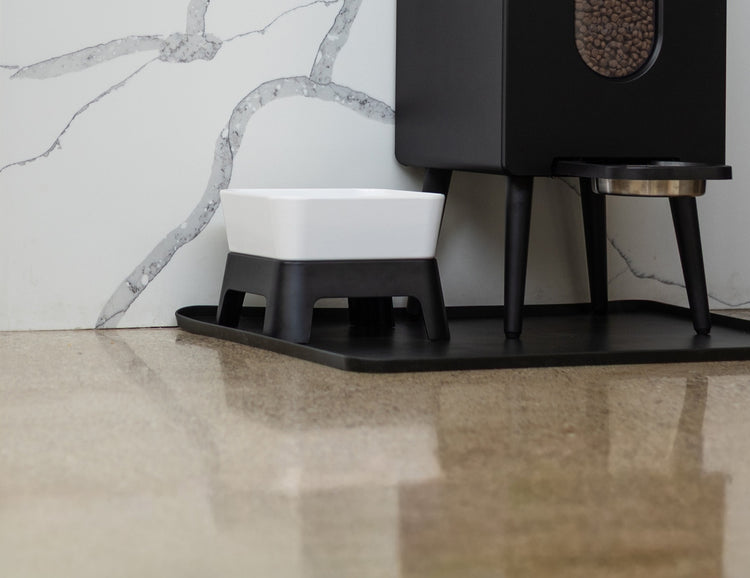
This is where we saw an opportunity to improve the routine. We designed our standing-height kibble dispenser to bridge the gap between freshness and daily convenience. Our dispenser holds a 25–30 lb bag of food, keeping it in a BPA-free liner that protects the flavor and nutrients. Instead of digging for a plastic cup, you simply turn a standing-height crank. It provides perfect portion control with every turn, so your dog gets exactly what they need every single time.
Maintaining a Consistent Feeding Routine
Consistency is one of the most overlooked aspects of dog care. Dogs thrive on routine. They find comfort in knowing exactly when and how much they will be fed. When you use a bulk-storage strategy combined with an efficient daily dispenser, you create a system that works for both of you.
Myth: "Free-feeding" (leaving food out all day) is the best way to keep a dog happy.
Fact: Scheduled feedings with controlled portions prevent obesity and allow you to monitor your dog's appetite, which is a key indicator of their health.
If you are vacuum sealing portions for the future, make sure you are also thinking about the daily experience. A portion-controlled feeding system allows you to keep that bulk-purchased food in a way that looks beautiful in your kitchen. It features a mid-century modern design that complements your decor rather than clashing with it. Good design means you don't have to hide the dog food in the garage or a utility closet.
For more ideas on building a predictable mealtime, explore this guide to scheduled feeding and leaving kibble out.
Is Vacuum Sealing Right for You?
Before you buy a vacuum sealer, ask yourself a few questions about your lifestyle.
- How long does a bag of food last? If your dog finishes a large bag in three weeks, vacuum sealing is likely unnecessary. Most high-quality kibbles stay fresh enough for 4–6 weeks if kept in a cool, dry place.
- Do you have the space? Vacuum-sealed bags are hard and brick-like. They don't "settle" into corners like loose bags do.
- Are you worried about emergencies? Many owners like to keep a 2-week supply of "emergency food" in case of natural disasters or supply chain issues. Vacuum sealing is the gold standard for this specific purpose.
Freshness and Safety Tips
Regardless of how you store your food, safety should always come first. Here are a few general rules to follow to keep your dog healthy.
Watch the Expiration Dates
Vacuum sealing can extend the life of food, but it cannot reverse time. Do not seal food that is already past its "best by" date. The nutritional decline has already started, and sealing won't stop it entirely.
Keep the Original Packaging
It is a good idea to cut out the brand name, flavor, and lot number from the original bag and tape it to your vacuum-sealed portions. If there is ever a product recall, you will need that information to know if your food is safe.
Wash Your Storage Containers
If you use a dispenser or a bin, wash it every time it becomes empty. Old fats can stick to the walls of the container and turn rancid, contaminating the new, fresh food you pour in. The Houndsy dispenser's BPA-free liner is designed to be easy to maintain, ensuring your dog's food always tastes the way it should.
Designing a Better Feeding Experience
At Houndsy, we believe that the tools you use to care for your pet should be as well-crafted as the tools you use for yourself. Vacuum sealing is a practical solution for the "storage" problem, but it doesn't solve the "feeding" problem.
The feeding ritual happens twice a day, every day, for the life of your dog. That is thousands of repetitions. When you simplify that process—removing the need to bend down, the mess of spilled kibble, and the guesswork of scooping—you improve your quality of life and your dog's.
Our mission is to make that experience elevated and consistent. By combining smart long-term storage like vacuum sealing with a beautiful daily kibble dispenser, you can enjoy the cost savings of bulk buying without any of the daily friction.
Bottom line: Vacuum sealing is a fantastic way to preserve bulk dog food for several months, provided you use high-quality bags and store them in a cool environment.
Conclusion
Vacuum sealing dry dog food is an excellent way to maintain freshness, save money on bulk purchases, and protect against pests. While it requires a bit of extra effort upfront, the benefits to your dog's health and your wallet are clear. Just remember to portion the food out, use the right settings to avoid crushing the kibble, and check your seals for punctures.
For your daily routine, consider how you can make feeding more consistent and less of a chore. We are proud to offer a solution that fits seamlessly into your home and your life. If you are ready to upgrade your dog's feeding station, the Houndsy Kibble Dispenser offers a beautiful, ergonomic way to serve those fresh meals. Plus, with our 30-day risk-free guarantee, you can see the difference it makes in your home with total peace of mind.
FAQ
How long does vacuum-sealed dog food last?
When stored in a cool, dark place, vacuum-sealed dry dog food can remain fresh for 1 to 2 years. However, most experts recommend using it within a year to ensure the vitamins haven't naturally degraded. Always check the original expiration date before sealing.
For additional guidance on freshness timelines, read how long dry dog food stays fresh.
Can I vacuum seal dog food in the original bag?
It is difficult to vacuum seal the original bag because the material is usually too thick or not designed to create an airtight heat seal. It is better to transfer the food into specific vacuum-sealer bags. If you want to keep the information from the bag, simply cut out the label and place it inside the vacuum bag before sealing.
Does vacuum sealing dog food prevent bugs?
Yes, vacuum sealing is one of the most effective ways to prevent pest infestations. Most grain-loving insects need oxygen to survive and reproduce. By removing the air and using a thick plastic barrier, you make the food invisible and inaccessible to ants, weevils, and moths.
Will vacuum sealing crush my dog's kibble?
It can, especially if you have a powerful machine and the kibble is porous. To prevent this, use the "pulse" setting on your vacuum sealer to stop the suction manually once the air is out but before the bag tightens too much. This preserves the shape and texture of the food.